
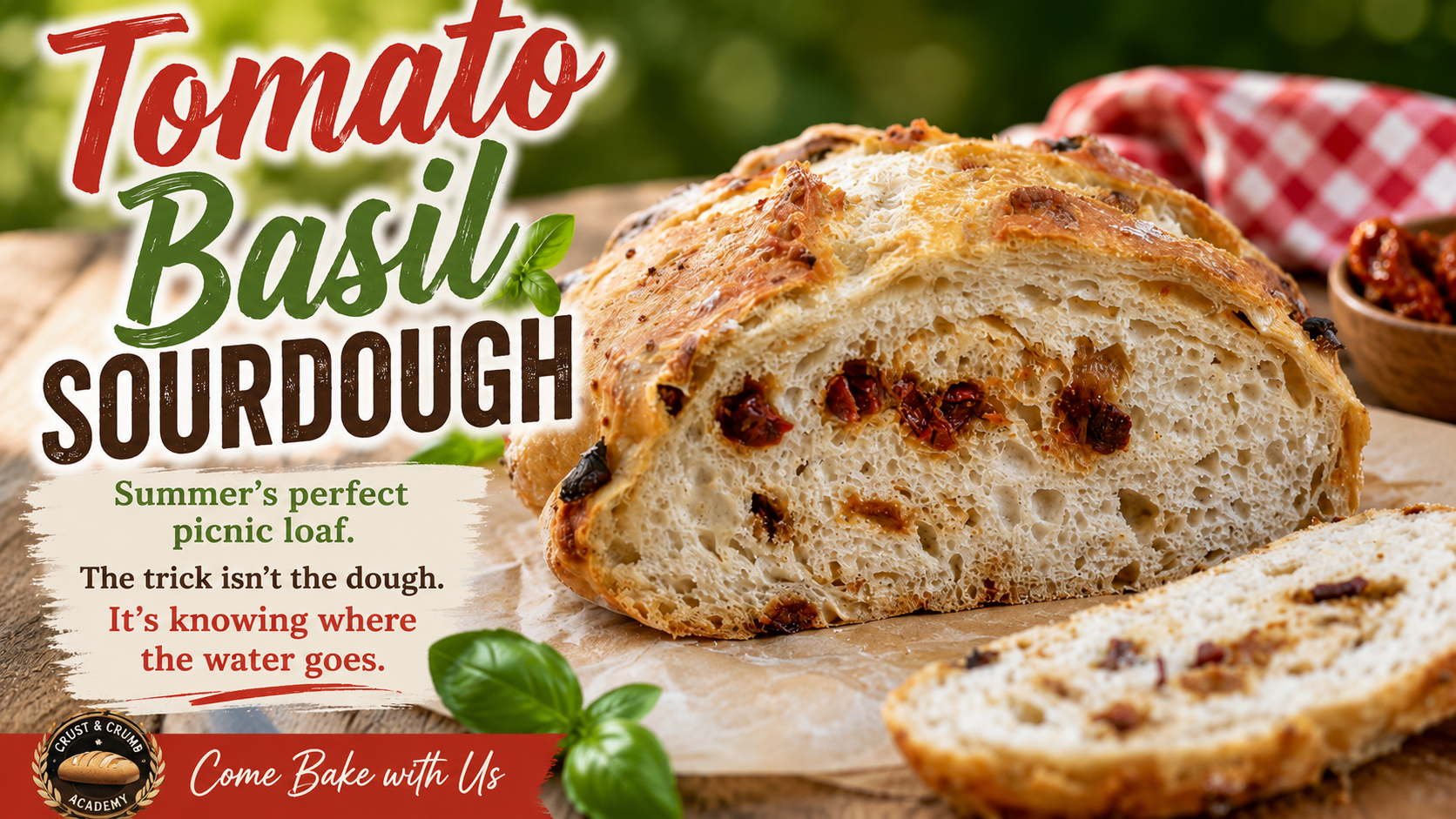

Tomato Basil Sourdough
Summer’s perfect picnic loaf. The trick isn’t the dough. It’s knowing where the water goes.
Nothing beats pulling a warm loaf out of the oven on a July evening. The kitchen’s already hot, the tomatoes on the counter are begging to get used, and you think: what if I just put them in the bread? That’s exactly how this tomato basil sourdough happens.
So you do. You halve a couple hundred grams of cherry tomatoes, drain them a little, fold them in, and bake.
And you get a gummy, wet, sunken loaf with pale streaks running through it.
I’ve watched a lot of bakers hit this wall, and almost every one of them blames the dough. It isn’t the dough. It’s arithmetic, and it’s the same arithmetic behind every tomato basil sourdough that goes wrong.
 The Recipe PantryEvery recipe I bake, free, and built to bake from. Over a hundred and fifty of them.›
A tomato is basically water in a costume
Here’s the accounting on 250g of fresh cherry tomatoes going into a 500g flour dough. This is why your loaf turned to soup.
So roast them first
That’s the whole fix. Not draining harder. Not adding flour to chase the mess. Roasting.
Put those tomatoes in a low oven and let them give up their water before they ever meet the dough. Three hundred fifty grams of fresh cherry tomatoes cook down to about a hundred and forty grams of concentrated, jammy, deeply red fruit. You lose the water. You keep every bit of the tomato.
And here’s the part that surprises people: it tastes more like tomato, not less. Fresh tomato in bread mostly tastes like nothing, because all that water dilutes it right into the crumb. Roasted tomato tastes like August.
And the basil goes in oil
Fresh basil folded straight into dough and baked forty-five minutes at 450F doesn’t stay green. It turns black, it turns bitter, and it turns into little dark specks that look like a mistake.
Toss the chopped basil in olive oil before it goes in. The oil buys it some protection. It’ll still darken some, that’s honest, but you keep the aroma and you skip the bitterness. It’s a small step, but it’s what keeps a tomato basil sourdough tasting bright instead of scorched.

Tomato Basil Sourdough
Roast the tomatoes first
- 350 gcherry or heirloom tomatoes, halvedabout 12 oz, roasts down to roughly 140 g
- 15 gextra-virgin olive oil1 tbsp
- 2garlic cloves, whole and unpeeledoptional, roast them right alongside
The dough
- 400 gbread flour3¼ cups
- 100 gwhole wheat or spelt flour¾ cup
- 350 gwater, room temperature1½ cups
- 100 gactive sourdough starter⅓ cup, at peak, floats in water
- 11 gfine sea salt2 tsp
Folded in at the end
- 140 gyour roasted tomatoes, cooledall of them
- 15 gfresh basil, chopped and tossed in olive oila large handful
Method
- Roast the tomatoes
Toss the halved tomatoes with the olive oil and a pinch of salt, spread them cut-side up on a sheet pan, and roast at 300F (150C) for 90 minutes to 2 hours until they’re shrunken and jammy but not crisp. Add the garlic cloves to the pan if you’re using them. Cool completely. Do this the day before if it’s easier.
- Mix
Combine the flours, water, and starter until shaggy. Rest 30 to 60 minutes if you’ve got the time. Add the salt and mix it through.
- Bulk ferment
Three or four stretch-and-folds across the first two hours. In a July kitchen this moves fast, so watch the dough and not the clock. You want roughly 30 to 50 percent growth and an airy feel. Usually 3 to 5 hours. Not sure what that actually looks like? here are the 3 visual signs bulk fermentation is done, so you stop guessing.
- Fold in the tomatoes and basil
On your last fold, lay the roasted tomatoes and the oiled basil across the dough and fold them in gently. Squeeze the garlic out of its skins and add it now if you roasted it. Don’t overwork it or you’ll smear everything into pink streaks.
- Shape
Wet hands, gentle tension, and don’t fight it. Inclusions make a dough want to tear, so ease into the shape instead of forcing it. Into a floured banneton or a towel-lined bowl.
- Proof
One to two hours at room temperature, or overnight in the fridge. In summer heat, the fridge is your friend and the flavor gets better anyway.
- Score it
Turn the loaf out onto parchment and score it just before it goes in. Keep it confident and shallow, one decisive cut. Inclusion doughs drag on a dull blade and a hesitation mark shows in the crust forever.
- Bake
Dutch oven, preheated to 450F (232C). Twenty minutes with the lid on, then 20 to 25 with it off until it’s deep golden. Watch the last stretch, because the sugar in the tomatoes browns faster than plain dough. Tent it if it’s running ahead.
- Cool completely
All the way. At least an hour. Slicing an inclusion loaf warm is how you get a gummy crumb and then blame the recipe.

If you’re serious about scoring, you need the right blade in your hand. Wire Monkey makes handcrafted bread lames from black walnut, built to last, balanced in the hand, and sharp enough to glide through cold dough cleanly every single time. No dragging, no hesitation marks. Just a clean cut.
Shop Wire MonkeyWhat to do with it
Thick slices, good olive oil, torn mozzarella. Grill it and rub a cut garlic clove across the hot surface. Or pile more tomatoes on top of it, because there’s no such thing as too far in July.


This one sells at a market
A tomato basil sourdough loaf in July is the kind of bread people walk past three stalls to get to. It photographs, it smells like summer, and it costs you pennies more than a plain boule. Sourdough leads a market table, and focaccia and sandwich loaves fill it out. A seasonal loaf like this one is how you get somebody to stop.
Not sure whether you’re ready to sell, or where you’d even start? Take the sixty second quiz. It asks a handful of honest questions and tells you which step is actually yours next, whether that’s cottage food law, pricing, or just picking your first market.
Take the 60 second quizCommon questions about this tomato basil sourdough
Why did my tomato bread turn out dense and gummy?
It’s almost always a hydration problem, not a dough problem. Fresh tomatoes release a large amount of water as they bake, pushing your dough far wetter than the recipe on paper suggests. Roasting the tomatoes first removes that excess water before it ever reaches the dough.
Can I skip roasting the tomatoes and use them fresh?
You can, but expect a wetter, denser crumb and a milder tomato flavor. Roasting concentrates the tomato’s flavor and removes the water that causes sunken, gummy loaves.
How do I stop basil from turning black in the crust?
Toss the chopped basil in olive oil before folding it into the dough. The oil coats the leaves and slows the oxidation that turns basil bitter and black in a hot oven.
Can I freeze tomato basil sourdough?
Yes. Cool it completely, then wrap and freeze it whole or in slices. Here’s the full method for freezing bread without wrecking the crumb.
Perfection is not required. Progress is. Go bake your own tomato basil sourdough this weekend.
Leave a Reply