
How to Freeze Bread Without Wrecking the Crumb
If a loaf won’t be eaten in a day or two, the freezer is its best friend. Here is how to freeze bread while it’s still good, then bring it back close to fresh.

You spent hours on that loaf. The fermentation took its time. The proof came good. The oven handed you a crust worth showing off. Then it sits on the counter, and by the second day it’s already heading downhill. Here’s the part most people get backwards. The clock starts the minute the bread cools, and the counter does nothing to slow it down.
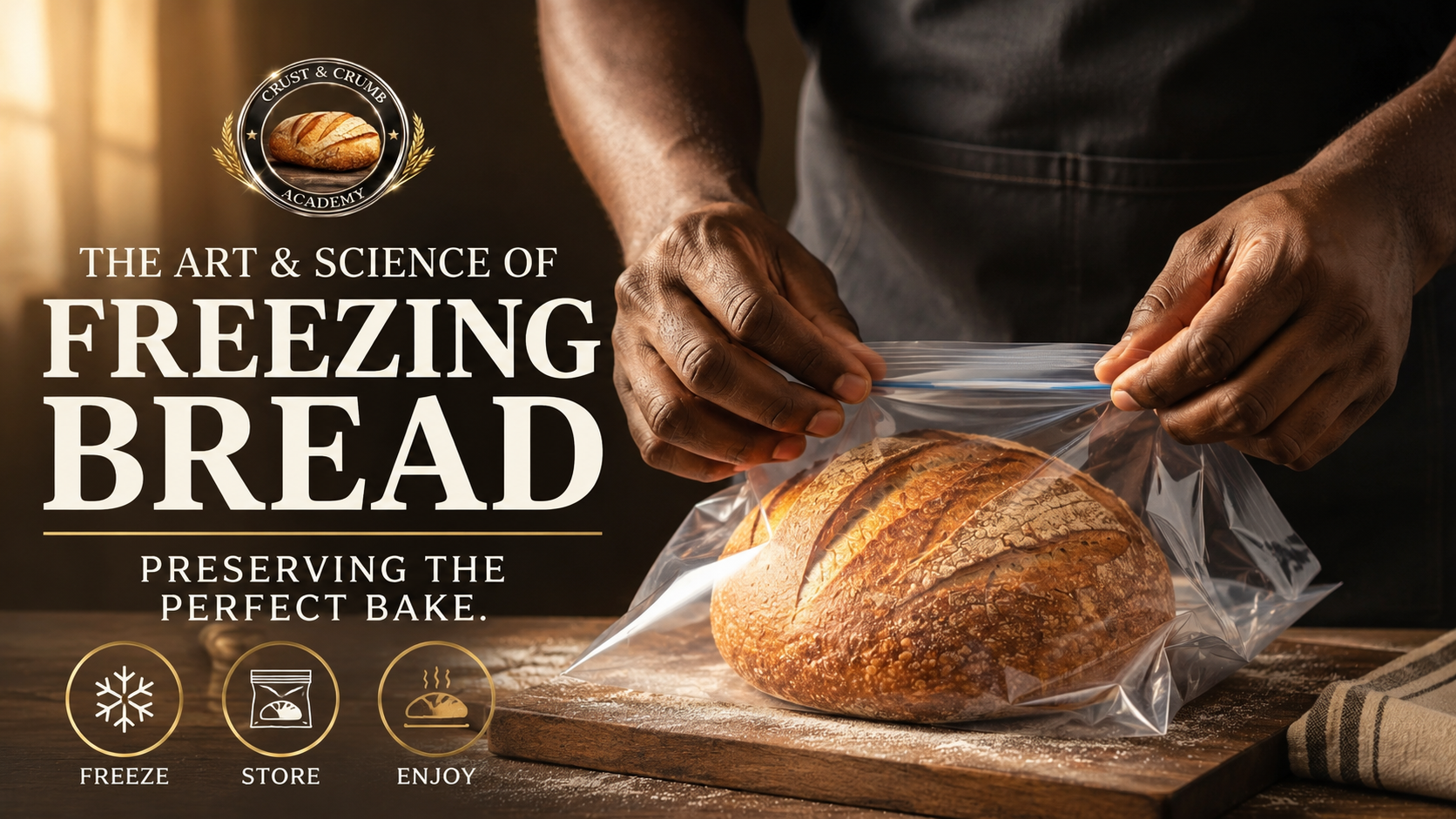
So let’s talk about how to freeze bread the right way, because done well, the freezer is the closest thing we have to a pause button on a fresh loaf.
Why the freezer beats the counter for anything past day two

Cornell Cooperative Extension puts it plainly: bread kept more than a day or two is best frozen. Federal food safety guidance backs the freezer too. Food held steadily at 0°F stays safe more or less forever, though the quality slowly slips the longer it sits. That gives you a clean rule to work from. Freezing bread is a quality play, not a magic fresh-forever trick. You freeze to protect what you already have. For everything that happens before the freezer, my guide on how to store your bread right walks through the day-to-day options.
The refrigerator fallacy: should you refrigerate or freeze bread?

The fridge feels like the safe move. It feels like preservation. For bread, it’s the opposite. Cool, above-freezing temperatures are about the worst place you can park a loaf, because that range actually speeds staling up. The refrigerator doesn’t pause the clock. It winds it forward.
Think of it as three zones. Room temperature for bread you’ll finish in a day or two. The freezer for anything you’re holding longer. The refrigerator only if you care more about slowing mold than about texture, and you’re willing to eat firmer, drier bread to get it.
What staling actually is

Staling isn’t just bread drying out. Classic cereal chemistry work describes it as two things happening at once. Moisture moves around inside the loaf, and the structure itself changes. The crumb hardens, the crust softens, and the whole thing turns from tender to crumbly. If you want the deeper chemistry, I dig into it in the art and science of storing bread.
The main driver is a mouthful called amylopectin retrogradation. After baking, the starch in the crumb slowly reorganizes into a tighter, more ordered structure. That’s the firmness you feel on day three. And here’s the kicker that explains the fridge: that reaction speeds up as the temperature drops toward bread’s freezing point. Newer storage research found the same thing, with refrigerator temperatures sharply increasing firmness in both pan bread and sourdough.
The storage matrix, at a glance

If you want the whole decision on one screen, this is it. Room temperature holds texture for a few days, then fades. The refrigerator slows mold but rushes the staling and turns the crust leathery. The freezer halts the texture changes and stops mold cold, as long as the loaf was sound going in and wrapped properly. Based on Cornell Extension and National Center for Home Food Preservation guidance, the freezer is the only column that protects all three: texture, mold, and crust.
Sourdough versus yeasted: who holds up longer

Sourdough gives you a little more breathing room on the counter, and there’s real science under that. A 2024 review on sourdough quality reports that fermentation slows starch retrogradation. The organic acids and the exopolysaccharides built during a long ferment help the crumb stay softer and hold moisture longer. One storage study even found a mixed sourdough more stable over ten days than a standard pan loaf.
Straight yeasted breads and sandwich loaves don’t get that acid-driven head start, so once you know they won’t be finished fast, the case for freezing gets even stronger. Either way, the rule holds: freeze it while it still tastes fresh. If you want loaves built to hold up, the long-fermented recipes in the Recipe Pantry are a good place to start. And if your dough behaves differently as the weather warms up, here’s why summer changes your dough.
One more thing. Freeze the baked bread, not raw dough. Frozen-dough research shows that freezing knocks down yeast activity, gas production, and loaf volume. Bake first, then freeze.
Quality in, quality out

The National Center for Home Food Preservation makes one point I want you to sit with. Freezing preserves most of the quality of a fresh product, but it can’t improve a loaf that’s already lost it. The freezer is a pause button, not a time machine.
Step one to freeze bread: cool, then decide

The golden rule is to cool the loaf completely before it’s wrapped. Package warm bread and you trap moisture vapor against the crust, which softens it and sets you up for freezer burn. Patience here pays off.
Then make one decision: slice or whole. If you mostly make toast and sandwiches, slice it first so you can pull what you need and go straight to the toaster. If the loaf is for a dinner, a gift, or you just want to keep that boule looking like a boule, freeze it whole or in halves. The cut size isn’t the science. Cooling first, getting the air out, and freezing promptly is.
The enemies of the freezer: what causes freezer burn on bread

Freezer burn looks scary but it’s a quality problem, not a safety one. Severe moisture loss
Keep your bread fresh longer

The hardest part of baking great bread is watching it go stale before you finish the loaf. The bread bag I use solves that. It’s reusable, made for bread, and it keeps the crust right whether you’re storing on the counter or freezing for later. It’s the one I reach for every time.
👉 Grab the ModKitchn bread bag and save 10% with my link
Ready to take your baking further?

Reading about bread is one thing. Baking it alongside people who get it is another. That’s what we do inside Crust & Crumb Academy. Every Saturday we bake the same loaf together, share photos, troubleshoot in real time, and cheer each other on. Whether you’re shaping your first boule or chasing the perfect crumb, you’ll have a whole room of bakers in your corner.
Come bake with us 👉 Join Crust & Crumb Academy

Leave a Reply