
The fruit soak starts now, the rest does the work, and the November 28 bake along gives you company for the shaping.
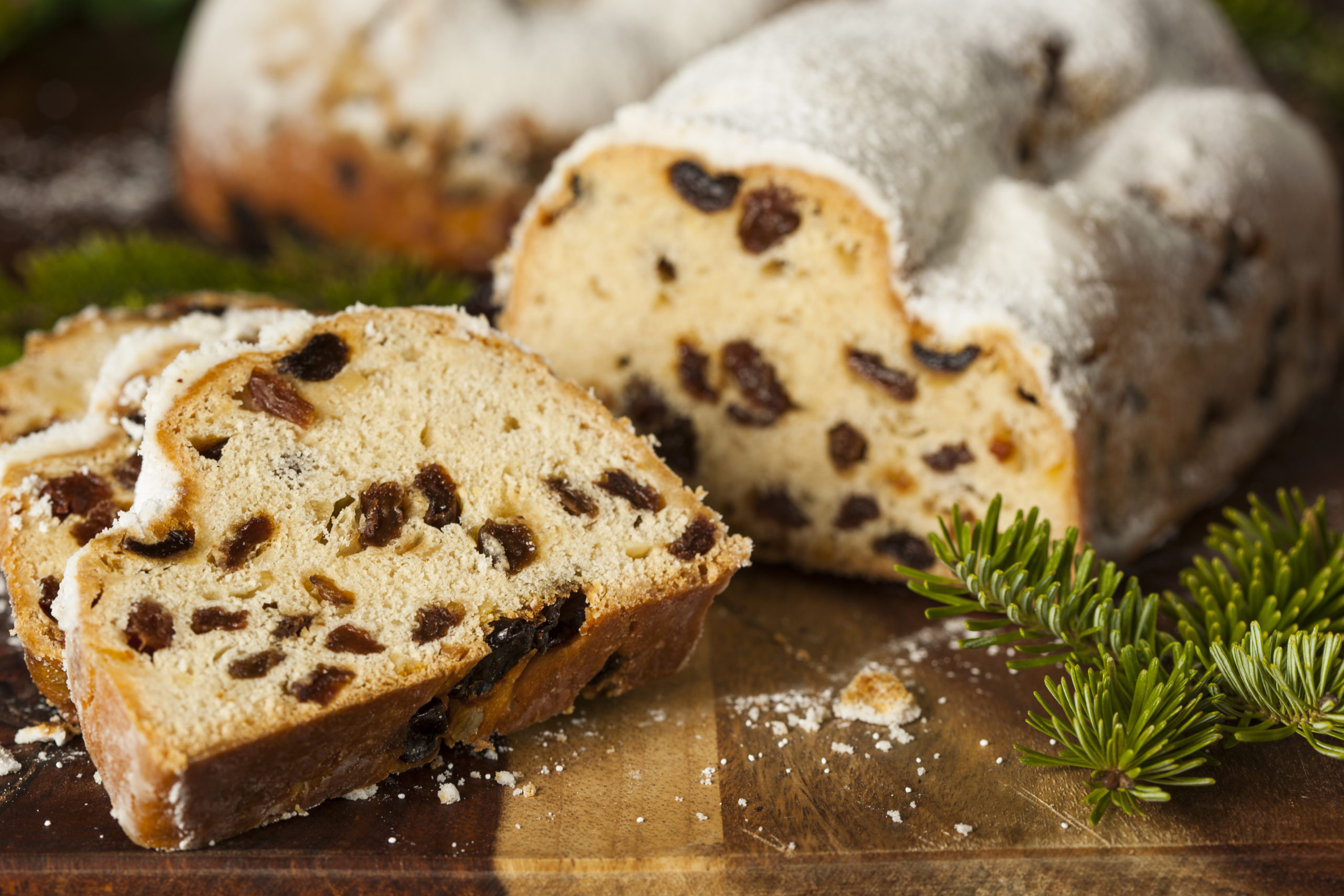
Stollen bread is a rich German Christmas loaf made from enriched yeast dough, dried fruit soaked in rum, almonds, and often a rope of marzipan folded into the center. Bake stollen bread by December 5, wrap it well, and let it rest for two to three weeks. That rest lets the butter, fruit, spice, and sugar settle into one flavor, so the loaf you slice at Christmas tastes rounder and calmer than the loaf that came out of the oven. If you bake stollen bread in late November, December stops being a scramble and becomes a slice, a plate, and a gift already wrapped.
That calendar is the whole point of this post. This is not a recipe reprint. The full recipe lives in the Recipe Pantry, linked below. This post is the plan around it: when to soak the fruit, how to shape the fold, how to finish it with butter and sugar, how to wrap it for the rest, and how to fix the problems that show up most often in home kitchens.
What stollen bread is, and why the wait matters
Stollen bread comes from Dresden, and the shape tells part of the story. The loaf is folded so one side overlaps the other, a shape bakers have long linked to a wrapped bundle. You do not need that history to bake a good loaf. You need a rich dough that can carry a lot of fruit, a gentle hand with that fruit, and patience after the bake.
Fresh stollen bread tastes pleasant. It is warm, buttery, and sweet in a direct way. Aged stollen bread tastes more settled. The rum notes soften, the fruit gives its flavor to the crumb around it, and the sugar coat stays put instead of tasting like a topping added at the last minute. In my kitchen, the difference between a loaf sliced on bake day and the same loaf sliced three weeks later is easy to notice. The later slices hold together better, and the flavor reads as one loaf rather than a list of ingredients.
That is why the date matters more than the decoration. A loaf baked on December 20 can still be good bread. It just has not had the rest that makes stollen bread what it is. A loaf baked by December 5 has.
The calendar that makes December calm
Work backward from Christmas, and stollen bread fits into November without crowding it.
Soak the fruit in late October
Start with the fruit. Raisins, currants, candied citrus peel, and dried apricots or cherries all work, and the Pantry recipe gives weights in grams and cups. Put the fruit in a jar with rum, stir it once a day if you think of it, and let it sit. A few days of soaking is plenty for most home batches. A week or two is fine too, and it is one job you can finish before November gets busy.
Drain the fruit well before it goes into the dough. Wet fruit makes a slack dough and a damp crumb. A short drain in a colander, then a pat with a towel, is enough. Save a spoonful of the soaking liquid for brushing, if you like, but do not pour the whole jar into the mixer.
Bake in late November
Late November is the sweet spot for most home bakers. The November 28 Saturday bake along in Crust and Crumb Academy is Stollen, so you can shape alongside other bakers and ask questions while the dough is still in front of you. If you bake on that Saturday, your loaf gets about four weeks of rest before Christmas, which is on the generous side of the range and still well within it.
If late November slips, the first days of December still work. Bake by December 5, and you keep the full two to three week rest. After that date, you are trading rest time for oven time, and the loaf will still slice and serve. It just will not have had the same quiet weeks to settle.
Rest, wrap, and wait
Cool the loaf fully before you wrap it. Warm bread wrapped tight will steam its own sugar coat soft. Once it is cool, wrap it in parchment, then wrap that bundle tightly in foil, and store it in a cool spot. A cool pantry, a garage that stays cool, or a cellar all work in my experience, as long as the spot stays steady and dry.
Resist slicing into it early if you can. One early slice will not ruin a loaf, but every cut opens a new surface to dry out. When Christmas week arrives, unwrap it, dust it again lightly with powdered sugar if the coat looks thin, and slice it thin. Thin slices are part of the pleasure. A thick slab of stollen bread can feel heavy. A thin slice with coffee or tea lets the fruit and marzipan speak without overwhelming the plate.
The shape: fold, not roll
Stollen bread shaping looks fussy in photos. In practice, it is one fold, done with care.
Roll or pat the dough into an oval, slightly thicker in the center. Press a shallow trench just off center with a rolling pin handle. Lay a rope of marzipan in that trench if you are using it, then fold the larger side over so the top edge lands short of the bottom edge. Press along the fold to seal it, but do not press so hard that you flatten the loaf.
That off center fold is what gives stollen bread its look. It also gives the marzipan a pocket to sit in, so it stays inside the loaf instead of leaking out onto the pan. If the fold springs open during the final rise, press it gently back into place and let the dough relax for a few minutes before you bake.
Two shaping notes from loaves I have watched go wrong. First, keep the dough even. A thin edge will bake dark before the center is done. Second, weigh the dough if you are making two loaves. The Pantry recipe yields two loaves of about 750 grams each, and even loaves bake evenly and gift evenly.
The butter and sugar finish, applied twice
The finish is simple, and it is worth doing in two passes. While the loaf is still warm, brush it generously with melted butter. Let that soak in for a few minutes, then dust it thickly with powdered sugar. Once the loaf is cool, brush it again lightly with butter and dust it again.
That second pass is the one people skip, and it is the one that builds the snowy coat you see in photos. It also helps seal the surface for the rest. If the sugar looks patchy after wrapping, a light fresh dusting at serving time fixes the look without changing the flavor.
Use real butter here, and do not rush the first brush. A loaf brushed while it is still hot will drink the butter in. A loaf brushed after it has gone cold will wear the butter on the surface instead.
Fixes for common stollen bread problems
The crumb is dry
Rich dough dries out when it is overbaked or when the fruit was not drained and then the baker added flour to compensate. Bake to color and to an internal temperature your recipe trusts, not to a clock alone, and pull the loaf when the center is set. If your oven runs hot, tent the loaf loosely with foil for the last part of the bake. A dry loaf also benefits from thinner slicing and a longer rest, since the butter finish keeps working after the bake.
The fruit sinks or clumps
Fruit sinks when the dough is too slack or when the fruit goes in wet and heavy. Drain well, toss the drained fruit lightly in a spoonful of flour, and fold it in with a gentle hand at the end of mixing. If the fruit still clumps, divide it into two additions instead of one large addition. The dough will distribute it more evenly with less handling.
The marzipan leaks
Marzipan leaks when the rope sits too close to the edge or when the fold was not sealed. Keep the rope in the trench, keep it short of both ends by a finger width, and press the fold closed. A small leak is not a failure. Trim it after baking if it bothers you, and serve that end first.
The loaf spreads flat
A loaf spreads when the dough was overproofed or when the fold was too loose. Watch the final rise by look and touch, not by time alone. The loaf should look puffy and spring back slowly when pressed lightly. If it looks slack and jiggly, it has likely gone too far, and baking it sooner is better than waiting for a shape that will not return.
The sugar coat melts or disappears
Sugar melts into a warm loaf, and it rubs off in wrapping if the loaf was wrapped while warm. Cool fully, finish in two passes as described above, and wrap in parchment first so the foil does not pull the coat off. A fresh dusting at serving covers any thin spots.
Gifting stollen bread
Stollen bread travels well, which is why the Holiday Baking Guide lists it under November gifts. A wrapped loaf in a simple box, with a short note saying when it was baked and when to slice it, is a gift people can use. Tell the recipient to keep it wrapped and cool, and to slice it thin starting in Christmas week.
If you are baking for gifts, bake an extra loaf for your own table. The first time you bake stollen bread, you will want to know how it slices, how the marzipan sits, and how the sugar coat holds up. Your own loaf is the test loaf, and it is also the reward for the weeks of waiting.
Stollen bread and the rest of the season
Stollen bread does not need to carry the whole holiday table. It pairs naturally with the rest of the November plan in the Holiday Baking Guide. Freeze dinner roll dough in November, bake and wrap fruitcakes, and let panettone take its turn in mid November with its daily refreshes. Stollen bread sits quietly in its foil while those bakes happen, which is exactly its job.
If you are choosing between stollen bread and another gift loaf this year, pick stollen bread if you like a loaf that improves while you ignore it. Pick a kringle or a fruitcake if you want a bake that asks for more attention in its final days. There is no wrong choice here, only a calendar choice, and stollen bread rewards the baker who plans early.
Frequently asked questions about stollen bread
Q: When should I bake stollen bread? A: Bake stollen bread by December 5 for a two to three week rest before Christmas. Late November is ideal, and the November 28 bake along is a good target date. Earlier baking is fine if the loaf stays wrapped and cool.
Q: Do I need marzipan in stollen bread? A: No, marzipan is traditional and welcome, but stollen bread without it is still stollen bread. If you skip it, keep the fold and the butter and sugar finish, and consider adding a few extra almonds for texture.
Q: Can I freeze stollen bread? A: Yes, in my experience a well wrapped loaf freezes well for a few weeks. Wrap it in parchment and foil, then place it in a freezer bag with the air pressed out. Thaw it wrapped, at room temperature, and dust it again lightly before serving.
Q: How thin should I slice stollen bread? A: Slice it thin, about the width of a finger or a little less. Thin slices show the fruit and marzipan, hold together better, and keep a rich loaf feeling balanced on the plate.
Q: Is stollen bread the same as fruitcake? A: No, though they share fruit and a long rest. Stollen bread is a yeasted bread dough, shaped and folded, with a butter and sugar coat. Fruitcake is usually a denser cake batter, often fed with spirits over many weeks. Both age well. They taste quite different on the plate.
A plan you can start tonight
Soak the fruit tonight, or this weekend, and the hardest part of stollen bread is already behind you. Shape it in late November, with the bake along if you can join it. Wrap it, store it cool, and let December arrive without a last minute bake on the list. When you slice it at Christmas, thin and dusted fresh, you will taste why bakers have kept this loaf on the table for so long.
For the full recipe, with weights in grams and cups, see Stollen, the Real One in the Recipe Pantry: https://recipepantry.app/recipes/traditional-german-stollen
For the season around it, see the Holiday Baking Guide: https://skoo.ly/holiday-bake
For the technique behind a rich, fresh milled loaf, see the fresh milled whole grain post: https://bakinggreatbread.blog/2026/09/24/fresh-milled-whole-grain-bread/
For another holiday loaf with a shaping story, see the Pan de Muerto post: https://bakinggreatbread.blog/2026/10/22/pan-de-muerto-bread/


Leave a Reply