Orange, anise, and a crown of little dough bones. This is the shaping bake of the season, and it is easier than it looks.
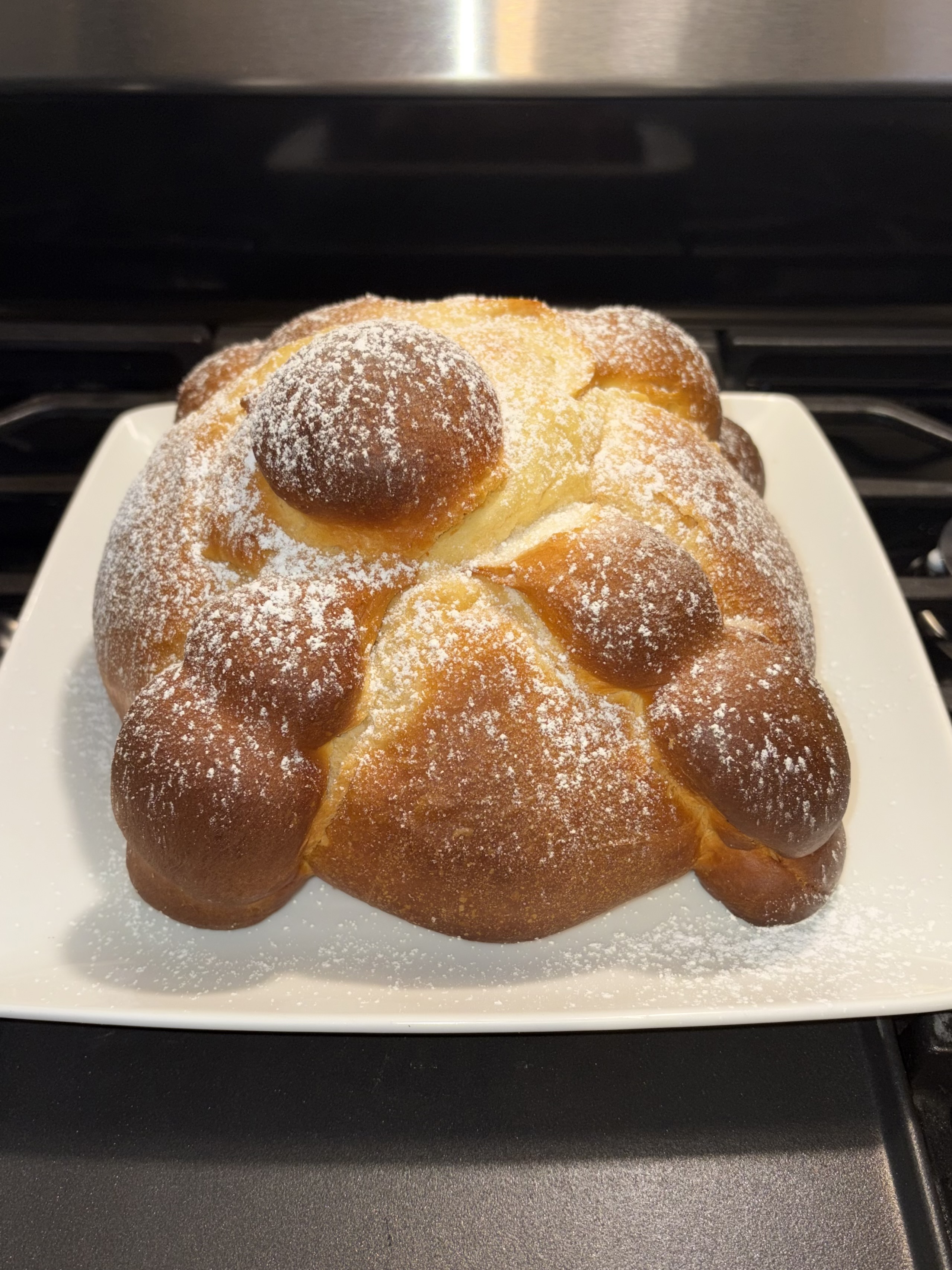
Pan de muerto bread is the soft, sweet loaf baked in Mexico for Día de los Muertos, the Day of the Dead. It is an enriched dough, like a tender brioche, flavored with orange and anise, and the top is decorated with little bone shaped pieces of dough that bake right into the crust. You mix a rich dough, shape a round loaf, roll ropes and balls from a little extra dough for the crossbones and the skull knob on top, and bake it deep golden. Families set it on ofrendas and then eat it together on November 1 and 2, and in our Academy we are baking it Saturday, October 24, as the season’s big shaping bake.

This post is about the technique, not just the recipe. The mixing is the easy part. The shaping is where this loaf becomes what it is, and shaping is a skill you can practice, get wrong once, and then do beautifully. By the end of this page you will know how the bones are built, why they stay on, what the flavor should taste like, and how to fix the two or three things that go wrong.
What Pan de Muerto Bread Is (and What It Is Not)
Pan de muerto is the star of Mexico’s Day of the Dead celebrations, and it is worth knowing what the bread is actually for. This is not Halloween bread. It is a beautiful, meaningful bread made to honor loved ones who have died. Families build ofrendas, altars layered with marigolds, photos, candles, and food the person loved, and pan de muerto sits at the center of it. This guide is about how to bake and shape it well. If you want to understand the deeper tradition, the Smithsonian has a thoughtful piece on Día de los Muertos and its food traditions.
You do not need a special pan de muerto recipe to bake a good one. You need an enriched dough you trust, the right flavors, and the shaping technique below. If you already bake an enriched sandwich loaf or a soft holiday bread, you are most of the way there. The difference is in the details: the orange and anise, the deep golden bake, and those little bones laid on top before the loaf goes into the oven.

The Flavor: Orange, Anise, and Sugar
Pan de Muerto bread should taste like celebration, not like dessert. The crumb is soft and buttery, perfumed with orange zest and a whisper of anise. It is sweet, but not frosted-cake sweet. Think of a tender brioche that spent a weekend in a Mexican bakery.
The two flavors that matter most are orange and anise. Use fresh orange zest, not extract, and go generous. Anise is the quiet one: a little ground anise seed or a splash of anise extract in the dough gives that unmistakable licorice-floral note. If you hate licorice, keep the anise light and let the orange lead. Either way, the loaf gets a final roll in sugar while it is still warm from the oven, sometimes with a brush of melted butter first. That crackly sugar crust is non-negotiable.
If your loaf tastes flat, it is almost always one of two things: not enough salt, or not enough zest. Enriched doughs need assertive seasoning because the fat and sugar mute everything. Taste your dough’s flavor in the finished crumb and adjust next time. The goal is a loaf that smells like orange when you tear it open.

The Dough: Rich, Soft, and Forgiving
Pan de Muerto bread uses an enriched dough, which means fat, sugar, and eggs tenderize the crumb and slow down staling. It behaves like brioche or challah. It will feel soft and a little sticky after mixing, and that is correct. Resist the urge to add flour until it feels like a lean bread dough. A soft dough gives a soft, feathery crumb.
Mix and knead it the way you would any enriched dough: develop the gluten first, then work in the soft butter a little at a time until the dough is smooth and elastic. Bulk ferment until puffy and nearly doubled, then chill the dough for 30 to 60 minutes before shaping. Cold dough is dramatically easier to roll into ropes and balls, and the bones hold their shape better. This is the same principle behind shaping any detailed loaf: firm, cool dough keeps every ridge and knob exactly where you put it. If you mill your own flour, this dough is a lovely place to use fresh milled wheat, swapped in for a portion of the bread flour.
Shaping Pan de Muerto Bread: The Bones, the Skull, and the Crown

Here is the part everyone worries about, and it is simpler than it looks. A traditional pan de muerto has three decorative elements: two crossed ropes of dough laid over the loaf like crossbones, and a small round knob on top for the skull. That is the whole vocabulary. Everything else is practice.
Start by dividing your dough. Set aside about one quarter of the dough for the decorations and shape the rest into a smooth, tight round loaf. Place it on your baking sheet. Now take the reserved dough and divide it into three pieces: two for the bones, one for the skull knob.
To make a bone, roll a piece of dough into a rope about as thick as your finger. Then roll a small ball on each end. The classic bone shape is a rope with a knob at each end, like a dog bone or a cartoon femur. Make two of these. Lay them across the top of the loaf in an X, the crossbones. Tuck the ends in just slightly so they bake into the loaf instead of sliding off.
For the skull, roll the last piece into a smooth ball and set it right in the center where the bones cross. Press it down gently so it adheres. Then let the whole loaf proof until puffy. The bones will rise with the loaf, and in the oven they bake into one beautiful piece. If a bone slides during baking, it was either under-proofed or the dough was too warm. Chill helps everything.
Bake until deeply golden, then finish while warm: brush lightly with melted butter if you like, and roll or dust generously with sugar. The sugar sticks to the warm crust and gives you that signature sparkle.
What Goes Wrong (and How to Fix It)
The bones slide off. This is the number one heartbreak. It happens when the bones go onto a loaf that is over-proofed or when the dough is too warm and soft. Fix it by chilling the shaped bones for 15 minutes before laying them on, and by pressing them gently but firmly into the loaf. They should look attached, not just resting there.
The bones disappear into the loaf. If your beautiful crossbones melt into vague lumps, the loaf over-proofed after the bones went on. The base loaf kept rising and swallowed them. Next time, put the bones on a slightly under-proofed loaf and get it into the oven promptly. You want the bones to rise with the loaf, not after it.
The loaf is pale and soft instead of deep golden. Enriched doughs need a hot enough oven and enough time. If your pan de muerto comes out blond, give it another 5 to 10 minutes. The sugar coating at the end adds color too, so bake the loaf itself to a real golden brown first.

Pan de Muerto Bread FAQ
Can I make Pan de Muerto bread with sourdough starter? Yes, and it is wonderful. Use a ripe, active starter at its peak and expect a longer bulk ferment. Enriched sourdough doughs are slower because the fat and sugar weigh things down. If you are still building your starter routine, our starter guide walks through keeping a starter ripe and active.
Do I need orange flower water? Traditional recipes often call for it, and it is lovely if you can find it. But fresh orange zest plus a little orange juice gets you 90 percent of the way there. Do not skip the zest either way.
Can I freeze Pan de Muerto bread? Yes. Bake it fully, skip the sugar coating, cool completely, and freeze well wrapped for up to a month. Thaw at room temperature, warm in a low oven, then brush with butter and roll in sugar while warm. It tastes freshly baked.
Why did my bones brown faster than the loaf? The thin ropes and knobs have less mass, so they color first. If they are getting too dark, tent the loaf loosely with foil for the last stretch of baking and keep the loaf itself in until it is deeply golden.
Ready to bake? Choose the yeasted Pan de Muerto recipe or the sourdough version. You can also find the full pan de muerto bread recipe in the Holiday Baking Guide.


$20 off with code ACADEMY26.
Leave a Reply