

Your Guide to a Stiffer, Richer Sourdough Starter
As we approach the fall season, it’s time to start thinking about the delicious breads you’ll be baking in the coming months. Today, we’re excited to introduce you to a game-changing technique that will elevate your bread-making skills: Pasta Madre. This traditional Italian stiff sourdough starter is the secret ingredient behind many festive breads, and we’re challenging you to incorporate it into your baking routine well before the holiday rush begins.
What is Pasta Madre?
Pasta Madre, also known as “mother dough” or “lievito madre” in Italian, is a type of sourdough starter that’s firmer and less hydrated than the liquid starters you might be familiar with. It’s a cornerstone of Italian baking, particularly for rich, festive breads like panettone. But don’t let its fancy name fool you – Pasta Madre can be a versatile addition to your everyday baking as well!
Why Start Now?
Building a Pasta Madre now gives you ample time to get comfortable with it before tackling more challenging holiday bakes. Even if you don’t have a specific recipe in mind, having this starter on hand opens up a world of possibilities. From adding complexity to your regular sourdough loaves to experimenting with enriched yeasted breads, Pasta Madre is a tool that can transform your baking.

Try selecting and removing or editing the caption, now you don’t have to be careful about selecting the image or other text by mistake and ruining the presentation.
How to Make Pasta Madre
Let’s get into creating your very own Pasta Madre, with a day-by-day breakdown:
- Day 1: In a medium bowl, mix 100g of bread flour with 50g of lukewarm water. Knead the mixture for about 5 minutes until it forms a stiff dough. Shape the dough into a ball and place it in a clean glass jar. Cover the jar with a cloth and let it sit at room temperature (around 70°F/21°C) for 24 hours.
- Day 2-3: After 24 hours, discard half of the dough. Add 50g of bread flour and 25g of water to the remaining dough. Knead well and reshape into a ball. Repeat this process on day 3.
- Day 4: By now, you might start to see some activity in your starter. It may have a slightly sour smell and a few small bubbles. Follow the same process as days 2-3, discarding half and feeding with 50g flour and 25g water.
- Day 5-6: Continue the feeding process as before. You should start to notice more bubbles forming and a stronger, pleasantly sour aroma developing.
- Day 7: Your Pasta Madre should now be showing clear signs of activity, with a noticeable increase in volume between feedings and a strong, tangy aroma. If it’s doubling in size between feedings, it’s ready to use. If not, continue the feeding process for a few more days.
- Day 8-10: If your starter wasn’t quite ready on day 7, continue the daily feeding process. By day 10, most starters will be fully active and ready to use.
Once your Pasta Madre is established, you can maintain it by feeding it once a week if stored in the refrigerator, or daily if kept at room temperature.
Pro Tip: During the creation process, try to feed your Pasta Madre at the same time each day. This consistency helps establish a strong culture of beneficial bacteria and wild yeasts.
What Pasta Madre Does for Your Bread
- Incorporating Pasta Madre into your bread-making process can bring several benefits:
- Enhanced Flavor: The slow fermentation process of Pasta Madre develops complex flavors, adding depth and character to your bread.
- Improved Texture: Breads made with Pasta Madre often have a lighter, more open crumb structure.
- Extended Shelf Life: The acidity in the starter helps preserve the bread, keeping it fresh for longer.
- Digestibility: Some people find sourdough breads easier to digest, and Pasta Madre is no exception.
The Pasta Madre Challenge
Now that you know what Pasta Madre is and how to make it, we challenge you to create your own and start experimenting! Here are a few ways to incorporate your new starter into your baking:
- Pasta Madre Sourdough Loaf: Replace a portion of your regular sourdough starter with Pasta Madre for added structure and depth.
- Enriched Yeasted Bread with Pasta Madre: Add a small amount (10-20% of flour weight) of Pasta Madre to your favorite yeasted bread recipe for a flavor boost.
- Sweet Bread with Pasta Madre: Experiment with sweet doughs to discover how Pasta Madre enhances the richness and complexity of the final product.
Remember, you don’t need to wait for a special occasion like making panettone to use your Pasta Madre. It can add additional flavor and depth to regular bread when used instead of or alongside your usual sourdough starter. You can also create a “hybrid” loaf by combining Pasta Madre with commercial yeast for enhanced flavor and texture.
Pro Tip: “Pasta Madre is like a fine wine – it gets better with age. The longer you maintain your starter, the more complex and nuanced its flavors become. Some Italian bakeries boast starters that are over a century old!”
Henry Hunter
Conclusion
Starting a Pasta Madre now is about more than just preparing for the holidays; it’s about expanding your skills and bringing something new to your baking repertoire. By the time the festive season rolls around, you’ll be well-versed in working with this unique starter, ready to tackle even the most challenging holiday breads.
We encourage you to share your Pasta Madre journey with us. Post pictures of your starter as it develops, and show us the delicious creations you make with it. Let’s see where this stiff starter can take your bread-making this season!
Happy baking, and may your Pasta Madre bring you many delicious loaves!


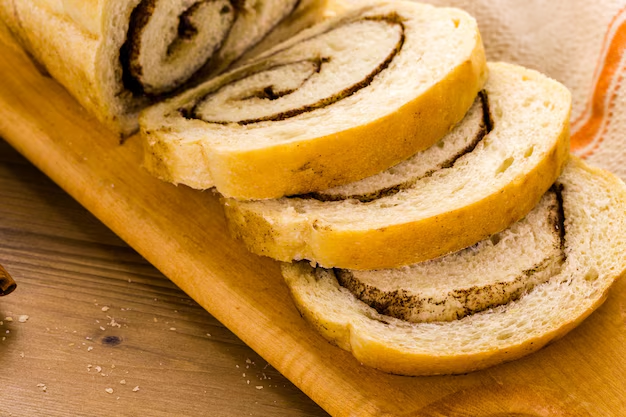
“Both of these recipes demonstrate how Pasta Madre can be used beyond traditional applications. The cinnamon swirl bread shows how it can add depth to enriched, yeasted breads, while the focaccia highlights its use in a fully sourdough context. Enjoy experimenting with these recipes and don’t hesitate to make them your own by adjusting flavors and add-ins!”

The Baking Great Bread at Home Community
Interested in deepening your baking skills? Listen to our Breaking Bread Podcast with Rachel Parker for insights on baking with preferments and refining your craft.
Thanks for Subscribing!
👋
Leave a Reply