

This week from my kitchen
A little more than three hours, a jar full of life, and what I’m learning on the road to panettone.
By Henry Hunter Jr. · November 4, 2026

I finished feeding my lievito madre at 9:49 this morning. I know the time because I’ve been filming the process for you. By 1:13 PM, I was standing at the counter looking at a jar that had changed dramatically.
We’re only on Day 3 of converting my regular sourdough starter into a stiff Italian lievito madre, the kind we want for panettone. I expected some activity. I didn’t expect it to put on this much of a show quite so soon.
9:49 AM Feeding finished · 3 hr 24 min elapsed · 1:13 PM photo taken
What the jar is showing me
The sides are full of small, closely packed bubbles. The X I cut into the top has opened up, and the surface is still rounded instead of flattening or sagging. Those are encouraging signs that the culture is producing gas and the dough is holding onto it.
I had moved the rubber band while monitoring the rise, so I don’t have a clean starting line for an exact volume measurement. I’m not going to call this a triple. What I can say is that the growth is obvious, it’s happening quickly, and the top still looks like it has some climbing left to do.
A fast rise is exciting. A repeatable rise, with the right aroma and the right timing, is what I’m after.


The feeding is the boring part. That’s the point.
We’re staying with the same formula for now: 50 grams of madre from the center, 50 grams of strong bread flour, and 22 grams of warm water. I knead it until smooth and firm, score an X, and put it back in the jar. The SourHouse Goldie helps me keep it in a steady, warm environment.
At this stage, we’re refreshing about every 12 hours. I’m not chasing a bigger jar of starter yet. I’m trying to build a reliable culture, feeding after feeding.
Day 3 refresh
50 g lievito madre · 50 g bread flour · 22 g water at 80–85°F
Hold the jar at about 76–82°F between refreshes. Watch the dough, not just the clock.
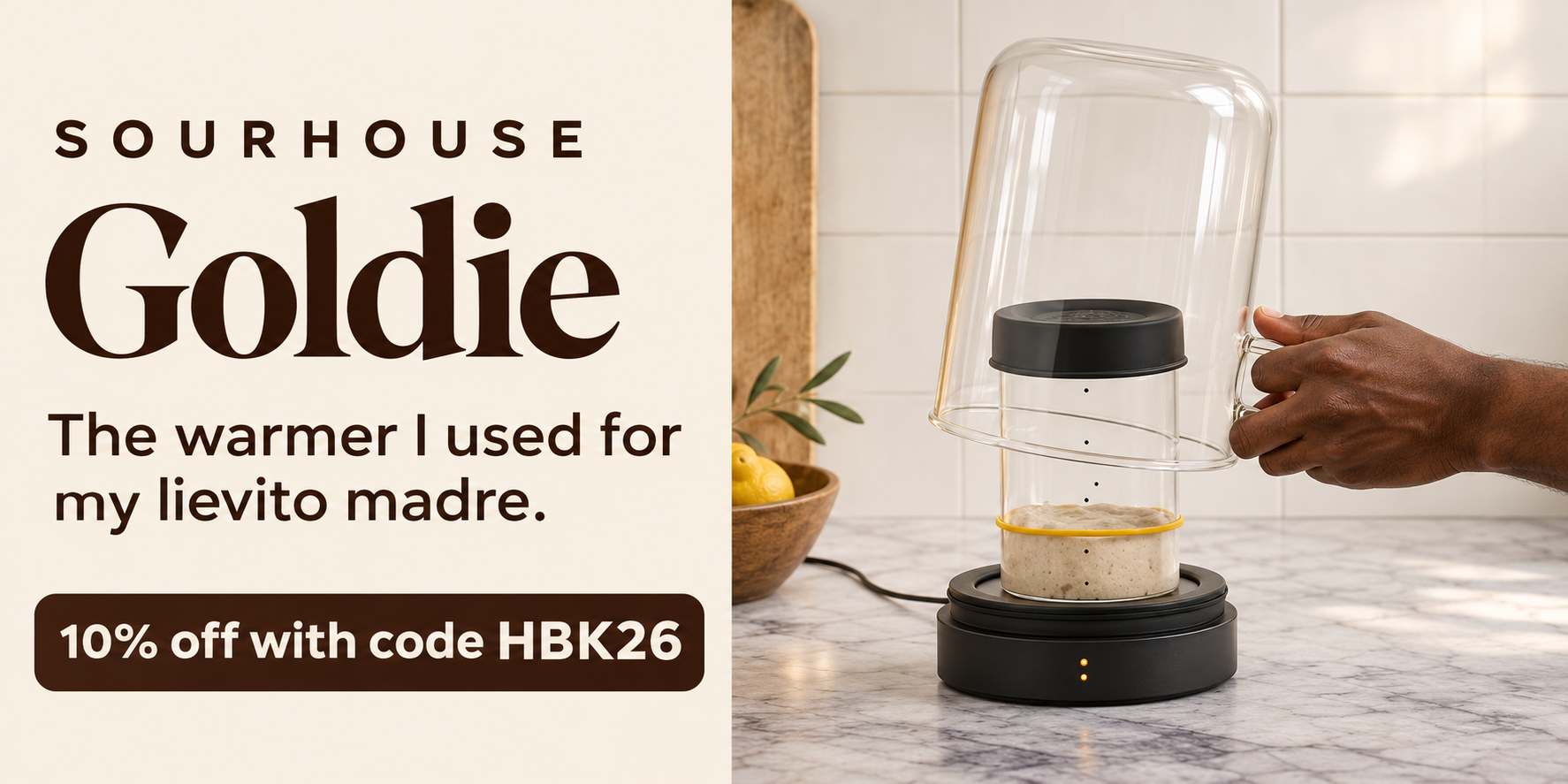
A tool I relied on: SourHouse Goldie

Affiliate note: I may earn a commission if you purchase through my link. The image includes my 10% off code, HBK26.
What I’m watching next
How far does the dome rise before it levels out? Does the interior have a fine, even honeycomb? Does it smell pleasantly like fresh dough or mild yogurt, rather than sharply sour? These details matter because panettone is a demanding dough with plenty of butter, sugar, and eggs.
Before I trust this madre in a panettone, I want more than one good afternoon. The bigger goal is a mature culture that can triple in about 3–4 hours at 82°F after its warm refreshes, with a mild aroma and good structure.
Come into the kitchen with me
I’ve been recording each stage so you can see the same signs I’m seeing, not just read about them.
Watch my Day 2 feeding demonstration
Today’s Day 3 feeding video: link to be added.
We’re working toward our Saturday panettone bake
This is why I’m taking you along for the whole conversion. By the time we start mixing panettone, I want you to know what a strong madre looks like, what the numbers mean, and why we don’t judge readiness on one impressive rise.
Come follow along with us at the Crust & Crumb Academy. You can also find the lievito madre conversion method in Recipe Pantry.
From the Bench
I could have looked at that jar, said “It’s doubled!” and moved on. Instead, I grabbed the camera, checked the time, and watched the shape of the dough. That’s the lesson I want to pass along.
Recipes tell us what to do. Paying attention teaches us why.
Keep baking,
Henry
Henry’s Notebook | RecipePantry.app | Crust & Crumb Academy. Perfection not required. Keep learning what the dough is telling you.
Leave a Reply