
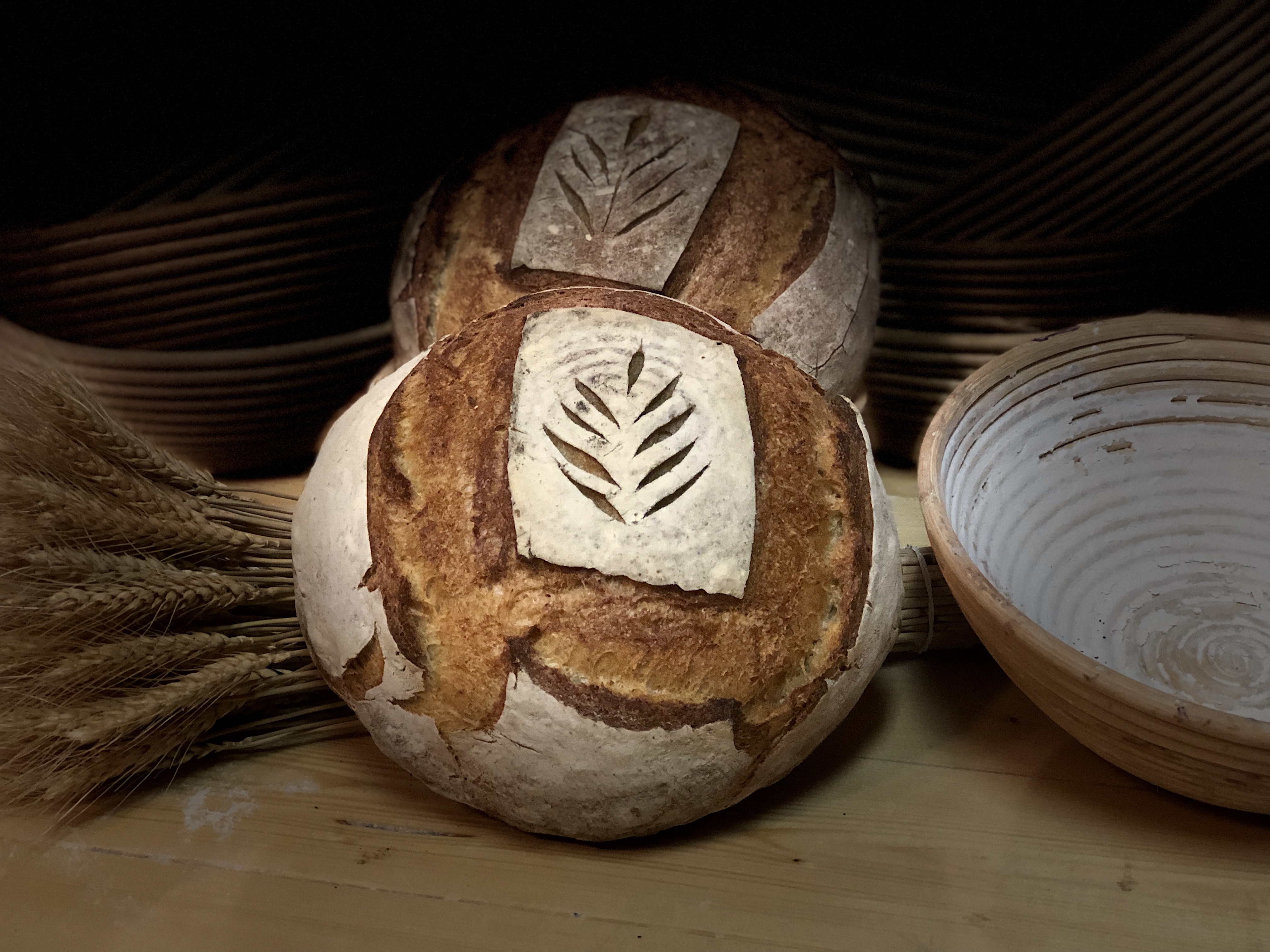
A hearty, wholesome sourdough packed with whole wheat, flaxseeds, sesame seeds, sunflower seeds, and just a touch of honey. This high-hydration loaf is flavorful, nourishing, and—if handled properly—achieves a slightly open crumb.
Introduction
The other day, I went to the doctor for my annual checkup. She looked at me, smiled, and said, “You, sir, are the picture of perfect health!”
…At least, that’s what I wish she had said.
Instead, she told me I needed to get more whole grains into my diet and start making healthier food choices. And of course, the first thing that came to mind was: bread.
If I was going to add more whole grains to my diet, they had to be in a way that made sense for me. I wasn’t about to give up good bread, so I went back to the kitchen and got to work. This is what I came up with—a multigrain sourdough loaf that’s hearty, packed with nutrition, and still delivers that deep, complex flavor and chew we love.
This bread has whole wheat, flaxseeds, sesame seeds, and sunflower seeds to give it that nutty warmth. It’s soft but hearty, rich but balanced, and perfect for everything from sandwiches to just tearing off a chunk and slathering it with butter. It’s also got a hydration level that keeps it from turning into a dense brick (because nobody wants that).
So if you’re looking for a healthy bread that still tastes amazing, this is the one. Let’s bake.
Ingredients
(Yields 1 large loaf or 2 medium loaves)
Flour & Dough Ingredients:
| Ingredient | Metric | Volume |
|---|---|---|
| Bread flour | 400g | 3 ¼ cups |
| Whole wheat flour | 400g | 3 ¼ cups |
| Water (lukewarm, 100°F/38°C) | 590g (hold back 30g if needed) | 2 ½ cups |
| Sourdough starter (active & bubbly) | 160g | ⅔ cup |
| Honey (mixed into water) | 20g | 1 tbsp |
| Salt | 16g | 2 ¾ tsp |
Seed Soaker (Prepare 4+ Hours Ahead):
| Ingredient | Metric | Volume |
|---|---|---|
| Flaxseeds (whole) | 30g | 3 tbsp |
| Sunflower seeds (toasted, optional) | 30g | 3 tbsp |
| Sesame seeds (toasted) | 30g | 3 tbsp |
| Pumpkin seeds (optional, toasted) | 30g | 3 tbsp |
| Water (for soaking) | 90g | 6 tbsp |
Method
1. Prepare the Seed Soaker (At Least 4 Hours Ahead)
📌 Why soak the seeds?
Seeds absorb moisture. If added dry, they pull water from the dough, making the loaf tough and dry. Nobody wants dry bread. Soaking keeps the loaf soft and gives the seeds a better texture.
- In a small bowl, combine flaxseeds, sunflower seeds, sesame seeds, and optional pumpkin seeds with 90g of water.
- Cover and let sit for at least 4 hours or overnight.
🔹 Pro Tip: If you’re short on time, use boiling water and soak for 1 hour instead.
2. Mix the Dough (10 minutes)
📌 Why mix all ingredients together?
Since we’re using natural sourdough fermentation, mixing everything except the soaked seeds from the start gives even hydration.
- In a mixing bowl, combine whole wheat flour, bread flour, water (hold back 30g), sourdough starter, honey (dissolved in water), and salt.
- Mix by hand, with a dough whisk, or on low speed in a stand mixer until everything is incorporated.
- Cover and let rest for 30 minutes to allow the flour to hydrate.
🔹 Pro Tip: This step mimics an autolyse but includes salt and yeast, so we avoid over-rising while still developing structure.
3. Stretch & Folds with Seed Incorporation (2 hours total)
📌 Why stretch & fold instead of kneading?
Because this technique strengthens the dough without overworking it, and it helps develop that nice open crumb (which can be tricky in whole wheat breads).
Stretch and Fold #1 (20 min): Add Seeds
- Wet your hands (wet hands for sticky dough!).
- Stretch one side of the dough up and over. Rotate the bowl and repeat on all four sides.
- Sprinkle ⅓ of the soaked seed mixture over the dough.
Stretch and Fold #2 (30 minutes later)
- Repeat the folding motion, adding another ⅓ of the seed mixture.
Stretch and Fold #3 (30 minutes later)
- Finish adding the last ⅓ of the seed mixture and do one final round of folds.
📌 By now, the dough should feel stronger and more elastic. Try the windowpane test!
4. Bulk Fermentation (3.5–5 hours at room temp or overnight in fridge)
- If your kitchen is cool (below 72°F/22°C), bulk ferment for 4–5 hours.
- If your kitchen is warm (above 75°F/24°C), check at 3.5 hours to avoid overproofing.
- OR refrigerate overnight (10–12 hours max) for deeper flavor.
5. Shaping & Final Proof
- Lightly flour the surface, turn out the dough, and gently pre-shape into a loose ball.
- Let it rest for 15 minutes, then do a final shaping into a boule or batard.
- Place seam-side up in a floured banneton.
- Cover and proof for 30–45 minutes in the fridge.
📌 Poke Test for Proofing:
- If the indentation springs back quickly, it’s underproofed—wait longer.
- If it barely moves, it’s overproofed—bake immediately.
- If it springs back halfway, it’s perfectly proofed.
6. Bake the Loaf
- Preheat oven & Dutch oven to 460°F (238°C).
- Turn dough onto parchment paper, score with a bread lame.
- Transfer to Dutch oven, bake covered for 20 minutes.
- Lower oven to 440°F (227°C), uncover, and bake another 15–20 minutes.
- Internal temp should reach 205°F (96°C).
Final Thoughts
This bread is flavorful, hearty, and nourishing while maintaining a slightly open crumb. The soaked seeds, hydration control, and careful fermentation make this loaf one of the best ways to enjoy whole grains.
If you want to take your bread to market, check out my book:
📖 From Oven to Market
Happy baking, and remember: wet hands for sticky dough! 😊 🍞
Never Miss a Recipe! 🍞✨
Are you tired of scrolling through endless ads and fluff just to find the recipe you need? We keep it simple, clean, and to the point—beautifully formatted recipes, pro tips, troubleshooting, and expert guidance to help you become a better baker.
📩 Subscribe to our blog today and get the best bread-baking content delivered straight to you—no ads, no clutter, just great baking.
🔗 Join us at bakinggreatbread.blog

Leave a Reply