
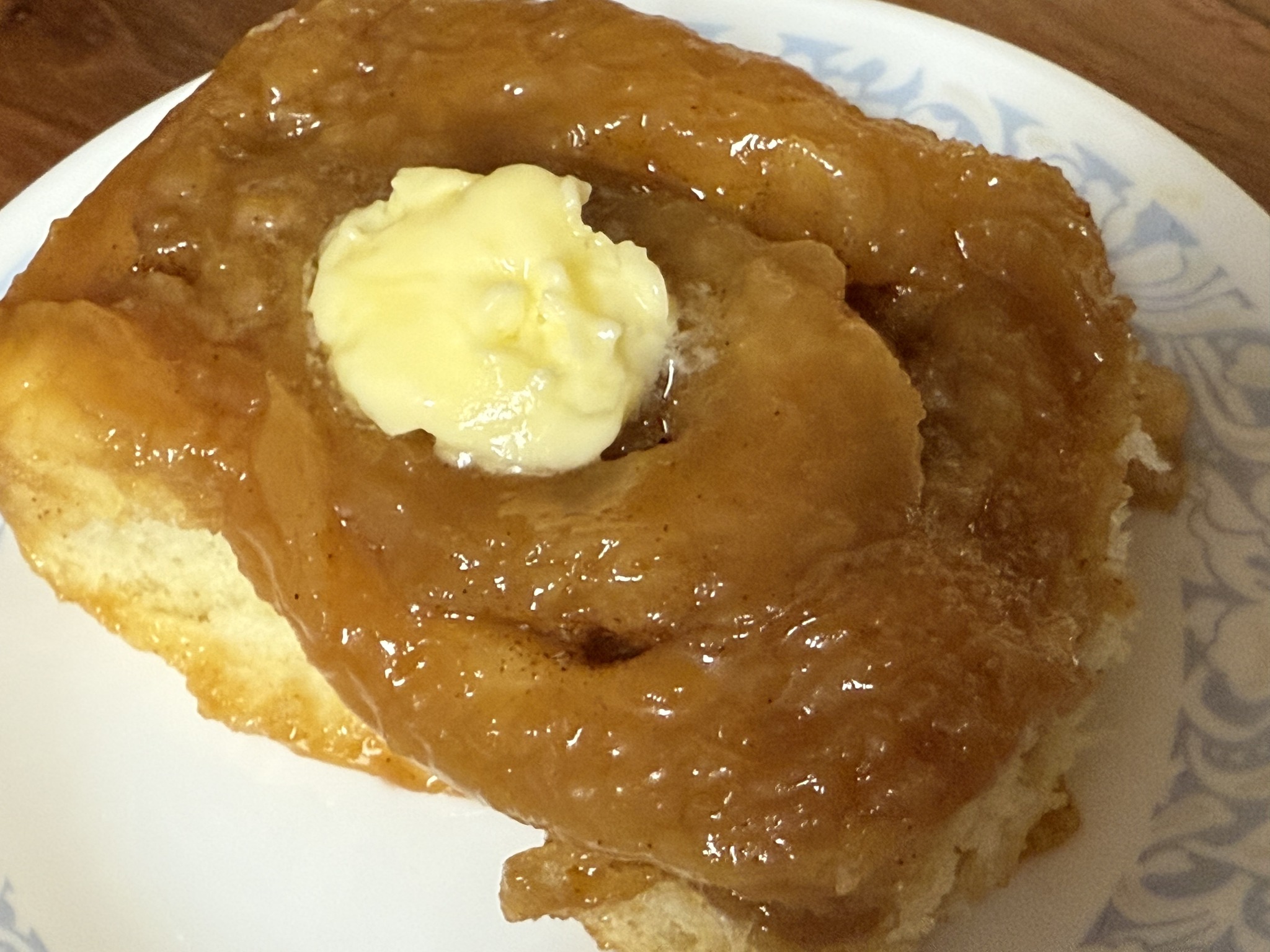
A Northern Plains Delight 🍯
By Cheryl Odden December 27, 2024
There’s something magical about the aroma of freshly baked caramel rolls wafting through a kitchen on a cold morning. While sticky buns reign supreme in the South, here in the Northern Plains, caramel rolls hold a special place in our hearts and on our breakfast tables. Today, I’m excited to share my tried-and-true recipe that I’ve perfected over decades of baking.
Introduction
These North Dakota Caramel Rolls feature a perfectly tender dough enveloped in a rich, smooth caramel sauce. Through years of testing, I’ve discovered that the quality of ingredients, particularly the heavy cream, makes all the difference in achieving that perfect caramel consistency.
Prep Time
- Prep: 45 minutes
- Rise Time: 1-2 hours
- Bake Time: 25-30 minutes
- Total Time: 3-4 hours
Equipment Needed
- Stand mixer with dough hook
- 2 9×13-inch baking pans (aluminum preferred)
- Large mixing bowl
- Rolling pin
- Saucepan
- Measuring cups and spoons
- Kitchen scale (optional)
- Bread cloth
- Sharp knife
Ingredients
For the Dough:
- 720g (6 cups) bread flour
- 1 package (7g/2¼ tsp) rapid rise active dry yeast
- 100g (½ cup) granulated sugar
- 113g (½ cup) shortening
- 480ml (2 cups) buttermilk
- 12g (2 tsp) salt
- 10g (2 tsp) baking powder
- 1.25g (¼ tsp) baking soda
- 120ml (½ cup) warm water (for yeast)
For the Caramel Sauce:
- 600g (3 cups) brown sugar
- 480ml (2 cups) heavy cream (Land O’ Lakes recommended)
- 30ml (2 Tbsp) light corn syrup
- 57-113g (4-8 Tbsp) unsalted butter, softened
- 15ml (1 tsp) ground cinnamon
- 45g (3 Tbsp) white sugar
Instructions
- Prepare the Dough:
- Dissolve yeast in warm water (120°F/49°C)
- In a stand mixer bowl, cream sugar and shortening
- Add buttermilk, yeast mixture, 240g (2 cups) flour, salt, baking powder, and soda
- Beat until smooth
- Gradually incorporate remaining flour to form a soft dough
- Knead 4-8 minutes until smooth and elastic
- Rest 10 minutes
- Make the Caramel Sauce:
- Combine brown sugar, cream, and corn syrup in a saucepan
- Heat over medium, stirring until sugar dissolves and sauce thickens slightly
- Divide between two 9×13 pans
- Assembly:
- Roll dough into 10×18-inch rectangle
- Spread with softened butter
- Sprinkle with cinnamon and sugar
- Roll from long side, seal edges
- Cut into 1-inch slices
- Place 6-7 rolls per pan on caramel sauce
- Cover with bread cloth
- Let rise near warming oven until doubled (1-2 hours)
- Bake:
- Preheat oven to 375°F (190°C)
- Bake 25-30 minutes until golden brown
- Invert onto platters while warm
Pro Tips
- Use aluminum pans for softer caramel consistency
- Don’t skimp on the butter, cinnamon, and sugar filling – measure with your heart! ❤️
- Optional: Add chopped walnuts or pecans to caramel before placing rolls
- For best results, use Land O’ Lakes heavy cream to prevent curdling
Nutrition Facts (per roll, approximate)
- Calories: 385
- Fat: 16g
- Carbohydrates: 58g
- Protein: 5g
- Fiber: 1g
- Sugar: 32g
Storage
Store covered at room temperature for up to 3 days, or freeze for up to 3 months.
These Northern Plains treasures are perfect for sharing with neighbors, family gatherings, or anytime you want to make someone’s day a little sweeter. As we say in North Dakota, #givebreadinstead 🌾
Recipe contributed by Cheryl Odden, Admin All-star contributor
About Henry Hunter
Henry Hunter is the author of six books on bread, including Sourdough for the Rest of Us and From Oven to Market. He learned to bake challah from a German baker named Herr Sherman during his military service, and now leads the 50,000-member Baking Great Bread at Home community and Crust & Crumb Academy. Perfection is not required. Progress is.
⭐ Crust & Crumb Academy is ProveWorth Certified, rated 5.0 from 61 verified reviews. Read the reviews.


Leave a Reply