
Henry’s Crusty White Bread Recipe
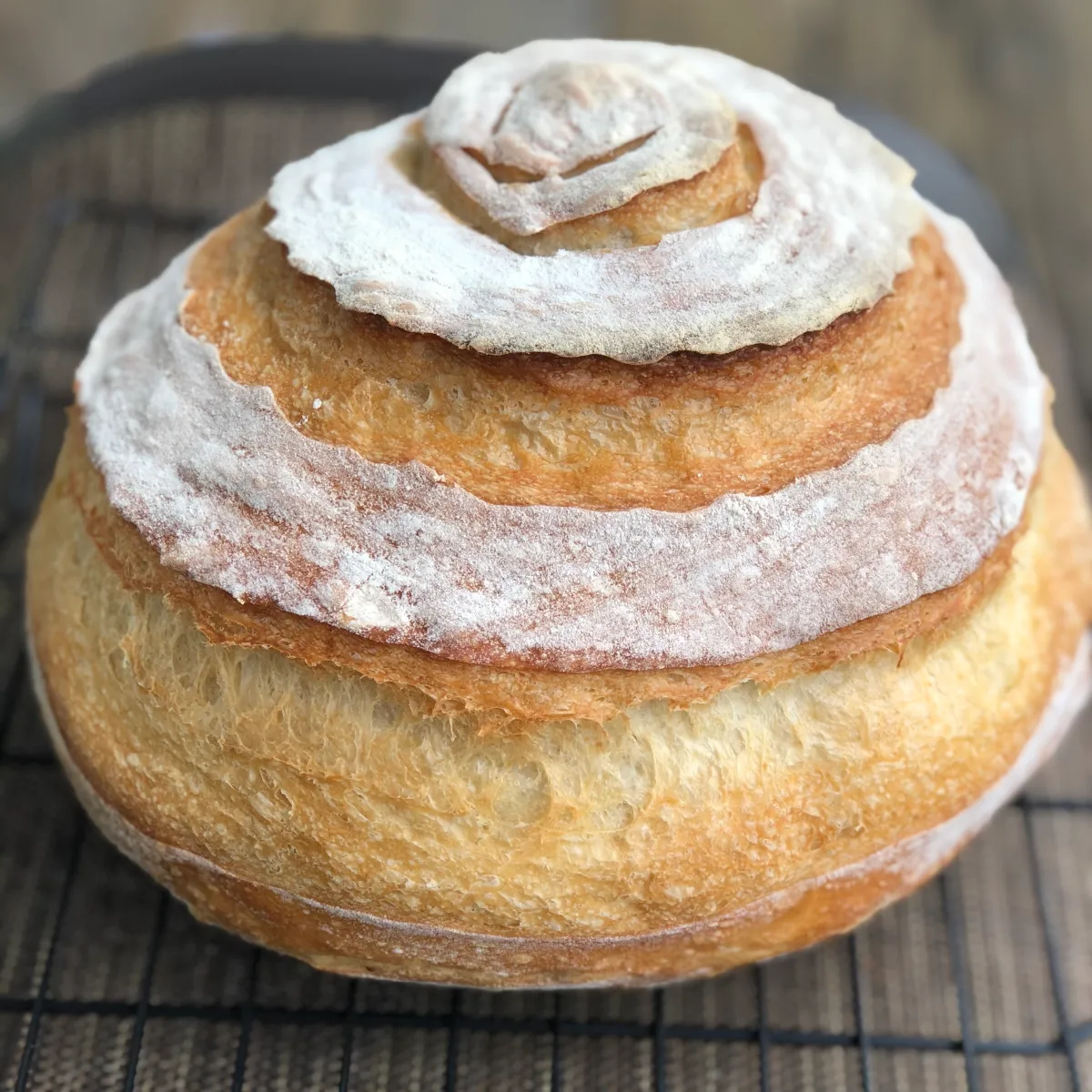
Today, I'm sharing my updated recipe for Henry's Crusty White Bread. This version makes two loaves and features a higher hydration level, giving you a moist crumb and a delightfully crispy crust. We've switched to bread flour for better gluten development and will be baking in a preheated Dutch oven to achieve that perfect crust. The handling techniques are inspired by traditional sourdough methods, enhancing both flavor and texture. Let's dive in!
Equipment
- Large Mixing Bowl: For combining your ingredients.
- Stand Mixer (Optional): Useful for mixing and kneading, especially with high-hydration doughs.
- Bench Scraper: Helps in handling and dividing the dough.
- Proofing Baskets (Bannetons) or Bowls with Floured Cloth: To support the dough’s shape during the final rise.
- Kitchen Scale: Ensures precise measurement of ingredients.
- Dough Whisk or Wooden Spoon: For initial mixing of the dough.
- Dutch Oven with Lid: Preheated, it creates a steam environment ideal for baking crusty bread. If you don’t have a Dutch oven, a baking stone or steel can be used, with added steam in the oven.
- Parchment Paper: Aids in transferring the dough into the Dutch oven and prevents sticking.
- Lame or Sharp Knife: For scoring the dough before baking.
Ingredients
- 900 grams 7 ½ cups bread flour
- 720 grams 3 cups lukewarm water
- 18 grams 1 tablespoon salt
- 14 grams 1 ½ tablespoons instant yeast or active dry yeast
- 20 grams 2 tablespoons dry milk powder
- 20 grams 1 ½ tablespoons granulated white sugar (optional)
Instructions
Mix the Dough:
- In a large mixing bowl or stand mixer, combine the bread flour, lukewarm water, salt, yeast, dry milk powder, and sugar if you’re using it.
- Mix until everything comes together into a sticky, shaggy dough And there are no dry spots.
Autolyse (Rest):
- Cover the bowl and let the dough rest for 30 minutes. This rest allows the flour to fully absorb the water, aiding in gluten development.
Stretch and Fold:
- After the rest, perform a series of 3 to 4 stretch and folds or coil folds.
- For stretch and folds, grab one edge of the dough, stretch it upward, and fold it over itself. Rotate the bowl 90 degrees and repeat until you've worked your way around the clock.
- Do this 2 to 3 times in total with a 30 minute rest in between. You're looking for a smooth and extensible dough.
- After the final stretch and fold, cover the dough and let it rise at room temperature for 30 minutes.
Divide and Pre-Shape:
- Turn it out onto a lightly floured surface and divide it into two equal pieces.
- Gently shape each piece into a loose ball.
- Cover and let them rest for 15 minutes.
Final Shaping:
- Shape each piece into your desired form, either a round boule or an elongated bâtard. Now is the time to shape it tightly.
- Place the dough into proofing baskets covered, then it's into the refrigerator for at least 2 hours and up to 7 days. This cold fermentation enhances the flavor and slows down the yeast.
Preheat the Oven:
- Place your Dutch oven (or baking stone/steel) into your oven and preheat to 450°F (230°C).
- When you’re ready to bake, remove the dough from the fridge.
- Carefully turn the loaves out onto pieces of parchment paper.
- Score the tops with a sharp blade.
Bake:
- Using the parchment paper as a sling, lower the dough into the preheated Dutch oven.
- Cover with the lid and bake for 22 minutes.
- Remove the lid and bake for an additional 15 minutes, or until the crust is deep golden brown and the internal temperature reaches 200°F (93°C).
Cool:
- Remove the bread from the oven and place it on a wire rack to cool completely before slicing.
Notes
The higher hydration makes the dough sticky; lightly flour your hands and work surface to manage it.
Cold fermentation enhances flavor; the longer the dough rests in the fridge (up to 7 days), the more complex the taste.
Baking in a preheated Dutch oven traps steam, creating a crisp crust. If you don’t have a Dutch oven, a baking stone or steel works too; just add steam to your oven by placing a pan of hot water on the bottom rack during the first 15 minutes of baking.
Enjoy baking your bread!
Cold fermentation enhances flavor; the longer the dough rests in the fridge (up to 7 days), the more complex the taste.
Baking in a preheated Dutch oven traps steam, creating a crisp crust. If you don’t have a Dutch oven, a baking stone or steel works too; just add steam to your oven by placing a pan of hot water on the bottom rack during the first 15 minutes of baking.
Enjoy baking your bread!
