“Click any image in this blog post for a link to its recipe.“
Easter is a bread holiday. Long before supermarkets wrapped hot cross buns in plastic clamshells, families marked this season by shaping Easter bread into loaves that told the whole story without saying a word. Paska, Colomba, tsoureki, hot cross buns: each one a different dialect of the same language.

Bread, the Table, and the Altar
In the earliest Christian communities, bread was never just fuel. The same dough that fed a household also appeared on the communion table, broken and shared as a sign of Christ’s body given for the world.
Over time, different traditions made different choices about that bread. Eastern churches kept using leavened loaves, seeing the rise of the dough as a picture of resurrection, while the Western church largely moved to unleavened wafers that echo the Passover story and the haste of Israel’s exodus. Councils and theologians have spent centuries arguing the details, but ordinary bakers kept doing the same thing: taking wheat, water, salt, and leaven and turning them into something big enough to share.
If you bake at home, you already stand close to that story. Every time you mix flour and water and wait through a quiet fermentation, you reenact a pattern the church has leaned on for centuries. Simple ingredients transformed into something generous enough to feed a crowd.

How Cultures Preach With Dough
Because Easter is about death, waiting, and surprising joy, cultures have used dough to tell that story in a hundred different ways.
In Eastern Europe, Paska and Kulich rise high and rich, often scented with citrus and vanilla and decorated with crosses or “XB” (Christ is risen). The height of the loaf and its sweetness are meant to taste like resurrection after the long fast of Lent.
Around the Mediterranean, Greek-style braided breads wrap eggs into the dough. The braid often stands for the Trinity, and the red eggs point to both blood and new life.
In Italy, Colomba Pasquale takes the shape of a dove, glazed with sugar and almonds and baked in a dove-shaped mold to picture peace landing right in the middle of Easter.
In the English-speaking world, hot cross buns carry a flour-paste cross and warm spices that call back both the crucifixion and the sweetness of resurrection morning.

In Britain and across the English-speaking world, hot cross buns carry the whole Good Friday story in a single soft roll. A flour-paste cross piped across the top, warm spice in the crumb, and a glaze of apricot or honey brushed on while the buns are still steaming from the oven. They’re small enough for a child to hold and old enough that bakers were marking bread with crosses long before Christianity gave the practice its current meaning. Whatever their origin, the cross on a hot cross bun has meant the same thing in kitchens for centuries: this is not an ordinary roll, and this is not an ordinary week.
What makes hot cross buns remarkable in this company is their accessibility. Paska takes patience and a tall pan. Colomba takes a dove mold and an afternoon. But hot cross buns can be on your table in three hours, made by anyone in any kitchen, and the cross goes on before baking so even a six-year-old can pipe it. They are the most democratic Easter bread there is. Simple enough for a beginner. Symbolic enough to belong at the same table as any of the grand loaves this season produces.
None of these breads are accidental. The braids, the crosses, the eggs, the doves, the towering loaves: all of them are ordinary kitchen dough pressed into service to tell the biggest story Christians know how to tell.

How Our Community Bakes the Story
Inside Baking Great Bread at Home and Crust & Crumb Academy, Easter has slowly turned into a little world tour of bread.
Last week, the community walked through Paska, learning how enriched dough handles butter, eggs, and patience, then watching those loaves rise tall for the Easter table. This weekend, we turned to hot cross buns, bringing together tangzhong, soaked fruit, and a simple cross on top so new bakers could taste a tradition that reaches back centuries.
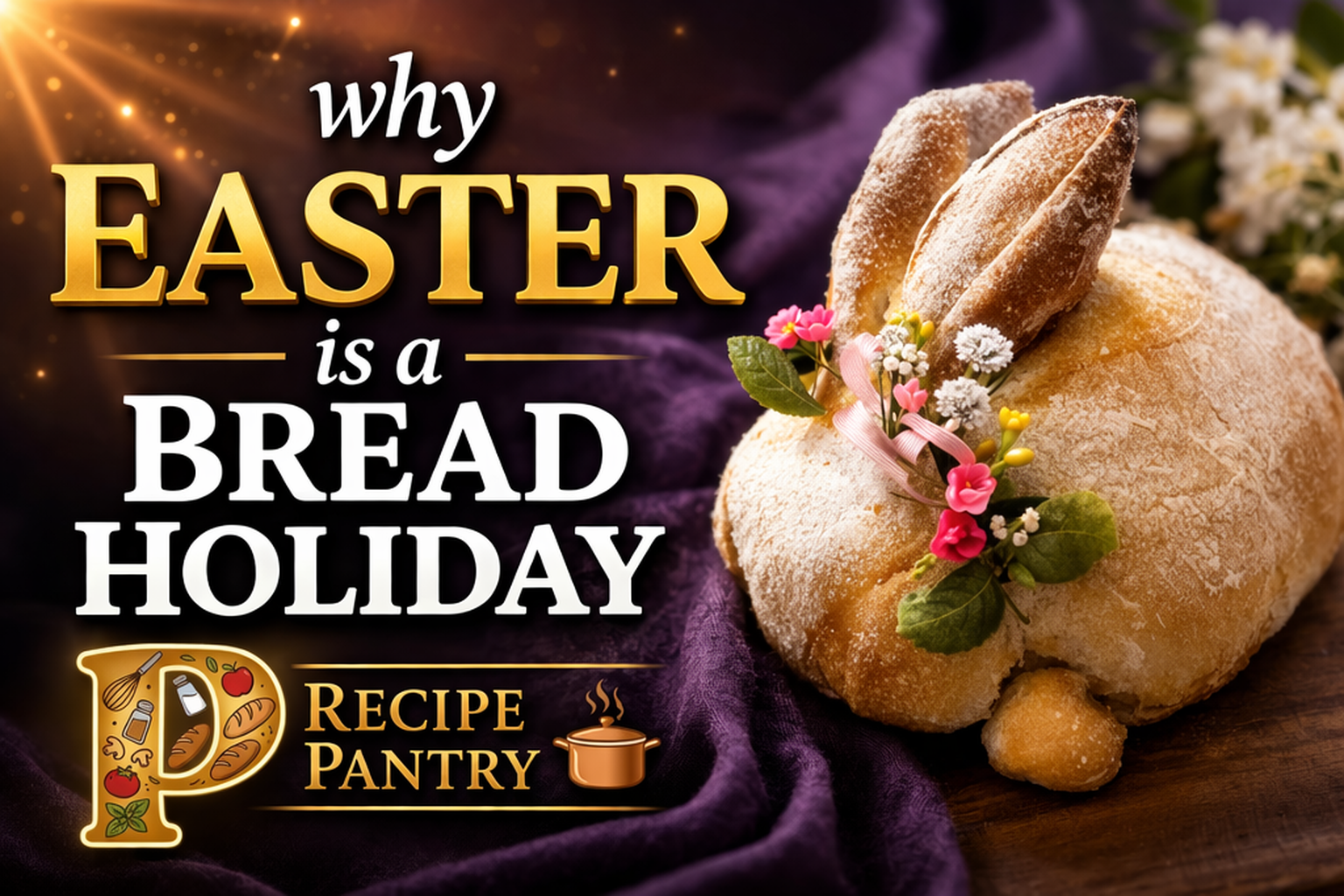
If you want to follow along or catch up, you’ll find those bakes in the Recipe Pantry: centerpiece Paska, playful bunny breads, sculpted bunny loaves, and both yeasted and sourdough hot cross buns. Think of that Pantry as a choose-your-own-adventure for Easter: pick the story you want to tell, then pick the dough that matches it.
Two New Easter Breads Were Just Added to The Recipe Pantry
There are still whole corners of the Easter bread map we Just now exploring together. Two new recipes have just landed in the Pantry so you can keep exploring.
- A braided Easter loaf inspired by Greek tsoureki: soft, lightly sweet, perfumed with citrus, and designed for simple three-strand braids you can tuck eggs into if you like.
- A Colomba-style Easter loaf: citrus, almonds, maybe a bit of candied peel, but baked in a standard pan or bundt so you don’t need specialty molds.
Both have been written for real home kitchens: gram weights, clear timelines, options for commercial yeast or a spoonful of starter for flavor.
Bringing It Back to Your Table
If Easter feels busy and complicated, let bread be the simple thing. Pick one dough, clear a little room on your counter, and let your hands tell a story that’s older than any plastic clamshell in a grocery bakery.
Whether you land on Paska, hot cross buns, a braided citrus loaf, or a Colomba-style pan bread, the work is the same: mix, wait, shape, and share. Somewhere between the first fold and the final crumb shot, you may find that the line between kitchen table and altar has gotten surprisingly thin.
Join Rachel Parker in Crust & Crumb Academy’s Breaking Bread podcast as she explores why Easter is, at heart, a bread holiday—tracing how communion tables and home kitchens share the same story, and how Paska, tsoureki, Colomba, hot cross buns, and other traditional loaves became edible symbols of resurrection and hope.

🔥👀 See What our Academy Members are Saying 👀🔥

Ready to bake one of these?
The hot cross buns are waiting for you in the Recipe Pantry — both the yeasted version and the sourdough version. Step-by-step instructions, baker’s math, and everything you need to put Easter bread on your table this year.
More Easter breads are coming to the Pantry soon. If you want to be the first to know, come find us inside Crust & Crumb Academy — that’s where the bake-alongs happen.

“Bakers don’t come here to get likes. They come here to get better.“
