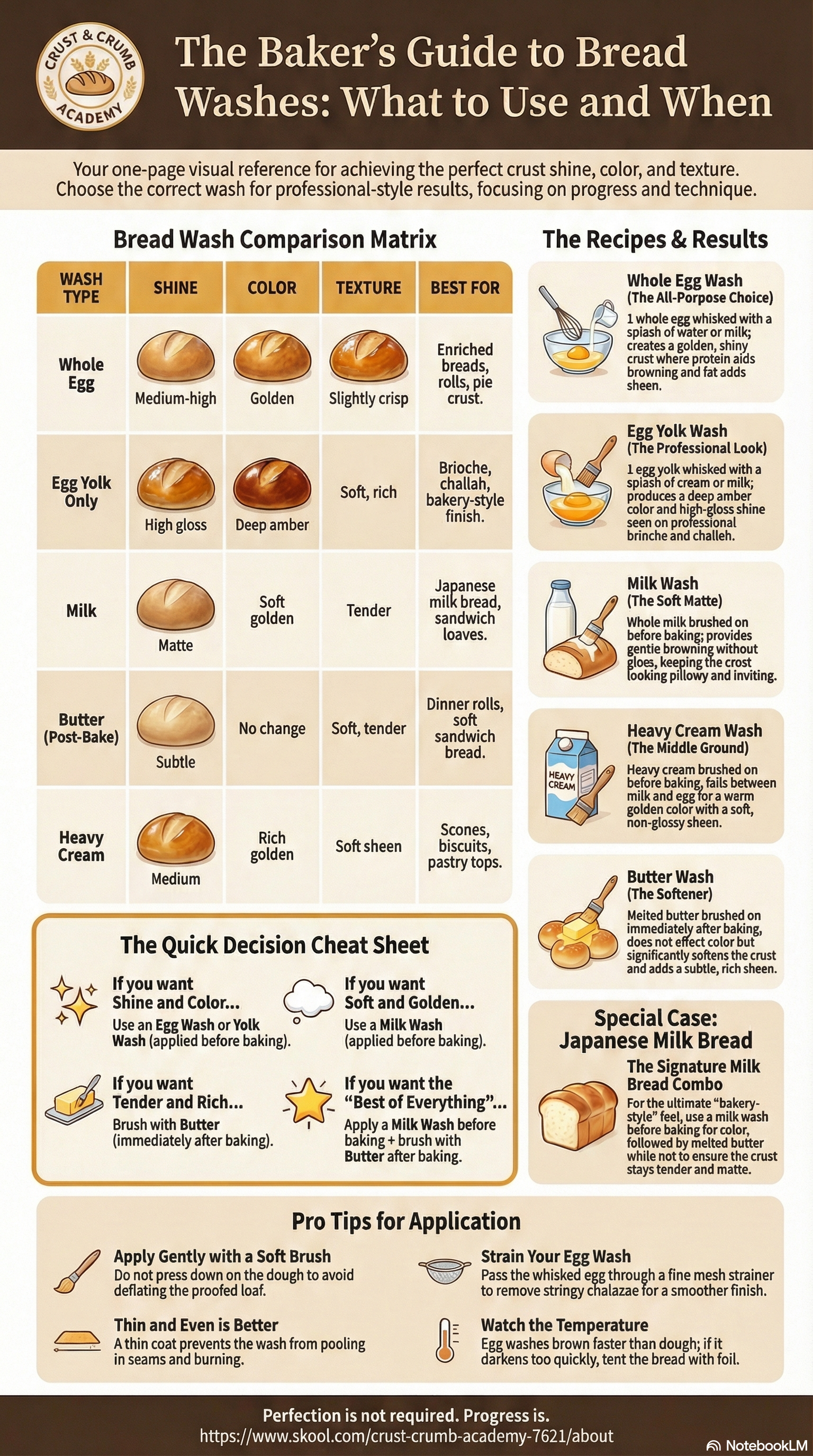

Bread washes affect the look, texture, and feel of the crust more than most people realize. A simple egg wash versus a milk wash can be the difference between a bakery-quality finish and something that looks homemade in the wrong way.
I put together a quick-reference breakdown of the most common washes, what each one does, and when to reach for which. If you want the full deep dive with all five pro tips and technique walkthroughs, that lesson lives inside Crust & Crumb Academy.

Quick Comparison

⬇️ Download the Bread Washes Cheat Sheet
What Each Wash Does
Whole Egg Wash
The all-purpose option. Whisk one whole egg with a splash of water or milk, and you get a golden, shiny crust with a slight sheen. The protein in the white helps with browning while the fat in the yolk adds color. This is your go-to when you’re not sure which wash to use.
Egg Yolk Wash
Deeper golden color and richer shine than whole egg. More fat means more color and a slightly softer crust surface. That deep amber finish you see on bakery-style brioche and challah? This is it.
Milk Wash
Softer, more matte finish with gentle browning. No glossy sheen — just a warm golden tone. This is why Japanese milk bread looks the way it does: tender, pillowy, inviting.

Butter Wash (After Baking)
Applied after the oven, not before. Melted butter brushed on immediately softens the crust and adds richness. That’s why dinner rolls and sandwich breads get butter the second they come out — it makes the crust tender instead of crisp.
Heavy Cream Wash
Falls between milk and egg in terms of richness. You get a warm golden color with a soft sheen but not full gloss. A great middle-ground option for scones, biscuits, and pastry tops.
Watch the Full Lesson
I recorded a complete walkthrough of bread washes with all the detail, pro tips, and technique demonstrations. Watch it here:

This is part of our Baker’s Fundamentals series inside Crust & Crumb Academy, where we go deep on the techniques that separate good bread from great bread.
Want the Pro Tips and Full Breakdown?
This post covers the essentials, but inside the Academy lesson you’ll get:
- All five pro tips for perfect wash application (including the straining trick most bakers skip)
- The specific two-step combo for Japanese milk bread that bakeries use
- Oven temperature adjustments for different washes
- Timing details that make the difference between good and great
The full Bread Washes module is available inside Crust & Crumb Academy along with our complete Baker’s Fundamentals curriculum.
Frequently Asked Questions
A whole egg wash (one egg whisked with a splash of water or milk) is the most versatile option. It gives you a golden color, medium-high shine, and slightly crisp texture that works on most enriched breads, rolls, and pastries. When in doubt, whole egg is your safest bet.
Always after baking. Brush melted butter on immediately when the bread comes out of the oven while it’s still hot. This lets the butter melt into the crust, making it soft and tender. If you brush butter on before baking, it can burn and create off-flavors.
An egg yolk wash gives you the deepest golden color and richest shine. Whisk one egg yolk with a splash of cream or milk and brush it on before baking. This is what bakeries use on brioche, challah, and other enriched breads to get that professional deep amber look.

What I Use: Temperature is the invisible variable in pre-ferment timing. I use Goldie to keep my pre-ferments at a consistent 75°F overnight, which means my poolish and levain are ready when I expect them to be — not two hours early or three hours late.
Goldie by SourHouse — precision proofing device for consistent fermentation temperature.
Use code HBK23 for 10% off. Affiliate disclosure: I may earn a small commission at no extra cost to you.

Ready to master the fundamentals?
The full Bread Washes lesson — with all five pro tips, Japanese milk bread technique, and detailed walkthroughs — is inside Crust & Crumb Academy. Join hundreds of bakers who are building real skill, not just following recipes.
Join the Academy — it’s free to start.
Where bakers come not to get likes, but to get better.