A German holiday bread, learned the old way
There are breads you bake once, and there are breads that follow you home.

This stollën is the second kind.
I didn’t learn it from a cookbook or a class. I learned it standing in a German bakery, early mornings, flour in the air, helping offset rent while I was stationed overseas. Mr. Sherman owned the bakery. He was patient, exacting, and generous with stories. If you wanted to learn, you showed up early, listened closely, and did the work.
Stollen was one of his breads.
Every December, the bakery smelled like citrus peel, butter, spice, and time. This wasn’t a bread you rushed. It was mixed carefully, baked gently, and then wrapped and left alone. He told me that was the point. Stollen was made ahead so families could slow down later.
That idea stuck with me.

What makes stollen different from other holiday breads
Traditional German Christmas stollën is not cake. It’s not brioche. And it’s definitely not a sweet loaf meant to be eaten warm and forgotten the next day.
Stollën is designed to rest.
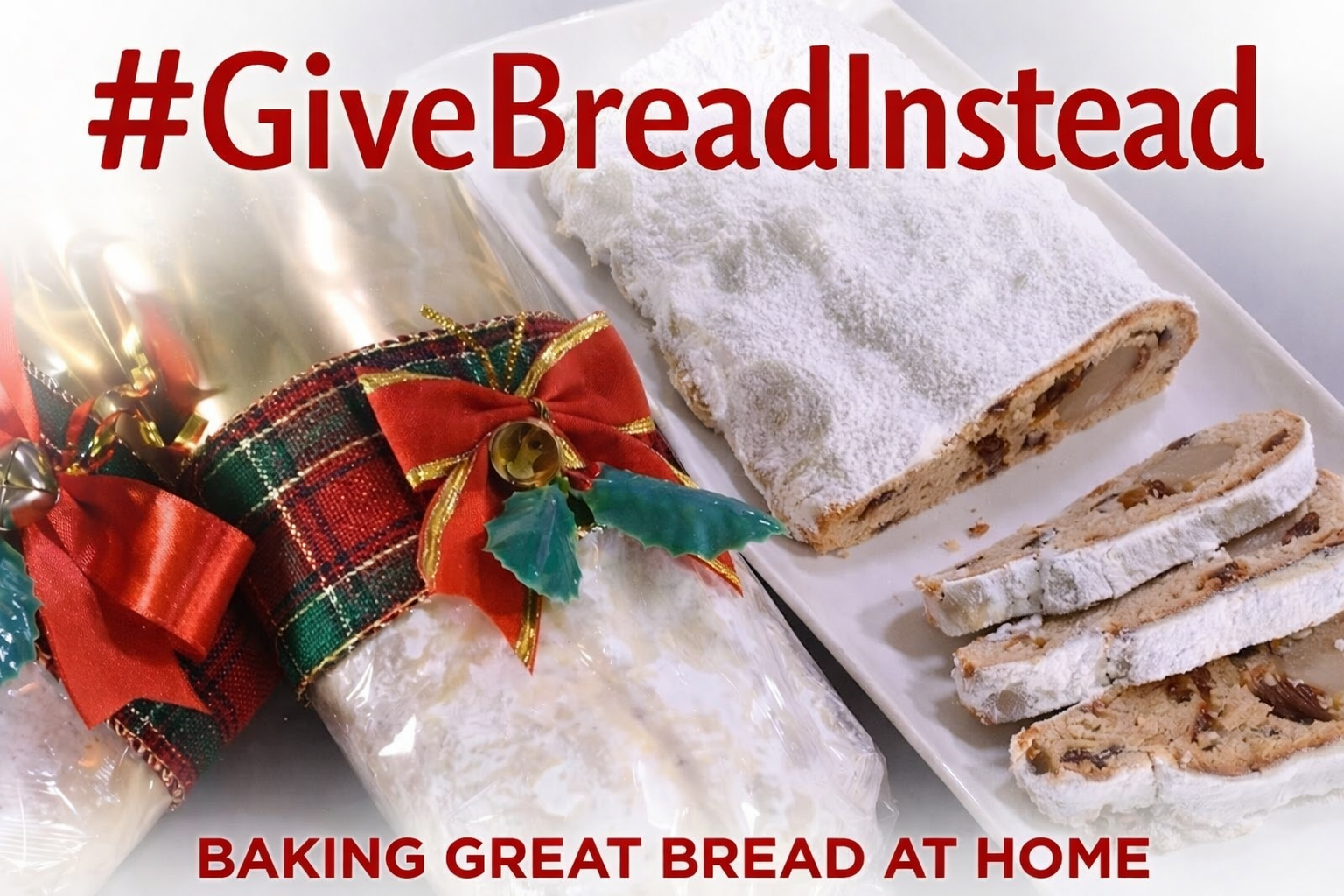
It’s enriched, yes. Butter, sugar, eggs, fruit. But what defines it is what happens after the bake. While still warm, the loaf is brushed with butter and coated in powdered sugar. Not for decoration. For preservation.
As it rests, the crumb absorbs fat, the spices mellow, the fruit perfumes the dough, and the bread actually improves. That’s why stollën has been baked for centuries as a Christmas and winter holiday bread. It fits the rhythm of the season.
Make it early. Share it slowly.

Henry’s Traditional German Christmas Stollën
Equipment
- Large Mixing Bowl
- Small bowl (for activating yeast)
- Measuring cups and spoons
- Microplane or fine grater (for citrus zest)
- Bench scraper (optional but helpful)
- Baking sheet
- Parchment paper
- Pastry brush (for buttering after bake)
- Wire cooling rack
- Instant-read thermometer (recommended for doneness)
Ingredients
Dough
- 500 g all-purpose flour about 4 cups
- 150 g granulated sugar ¾ cup
- 1/2 teaspoon salt
- 1 teaspoon ground cinnamon
- 1/2 teaspoon ground nutmeg
- Zest of 1 lemon
- Zest of 1 orange
- 7 g active dry yeast 1 packet
- 120 g warm milk about 110°F / 43°C (½ cup)
- 2 large eggs room temperature
- 1 teaspoon vanilla extract
- 100 g unsalted butter softened (7 tablespoons)
Fruit and Nuts
- 200 g mixed candied fruit about 1¼ cups
- 100 g raisins ⅔ cup
- 100 g almonds chopped (¾ cup)
For Finishing
- 60 g unsalted butter melted (4 tablespoons)
- Powdered sugar for generous dusting
Instructions
Activate the yeast
- In a small bowl, combine the warm milk, yeast, and a pinch of the sugar. Stir and let sit 5–10 minutes, until foamy.
Mix the dough
- In a large bowl, combine the flour, remaining sugar, salt, cinnamon, nutmeg, and citrus zest.
- Add the yeast mixture, eggs, and vanilla. Mix until a rough dough forms. Add the softened butter and knead until fully incorporated.
Knead
- Knead by hand for 8–10 minutes, until the dough is smooth, elastic, and slightly tacky but not sticky.
First rise
- Place the dough in a lightly greased bowl, cover, and let rise in a warm spot for 60–90 minutes, until puffy and slightly expanded.
Add fruit and nuts
- Gently press the dough into a rectangle. Scatter the candied fruit, raisins, and almonds over the surface. Fold the dough over itself and knead gently just until evenly distributed.
Shape
- Flatten the dough into an oval. Fold one long side over toward the center, slightly offset, creating the traditional stollen shape.
- Transfer to a parchment-lined baking sheet.
Final rise
- Cover loosely and let rest 30–45 minutes while the oven preheats.
- Preheat oven to 350°F (175°C).
Bake
- Bake for 35–40 minutes, until golden brown and the internal temperature reaches 190–195°F (88–90°C).
Butter and Sugar
- Transfer the hot stollen to a wire rack. Brush generously with melted butter, then dust heavily with powdered sugar.
- Allow to cool completely, then dust again.
Notes
A small observation that stayed with me
Stollën is a Christmas bread. That never changed.
What stayed with me was the moment itself. I was a black man learning to make a Christmas bread from a Jewish baker during Hanukkah In Germany. Mr. Sherman never mentioned it. He didn’t need to. I noticed because it felt ordinary in the best possible way.
He never let cultural boundaries limit him as a baker. Bread, to him, wasn’t about ownership or labels. It was about craft. About doing something well and passing it on without ceremony.
His bread met you where you were. If you showed up willing to work and pay attention, you belonged at the bench. That was the only requirement.
That’s why I still bake this bread today. Not just because it tastes good or keeps well, but because it reminds me how knowledge is meant to move. Quietly. Hand to hand. Without asking permission from the calendar.

From yeast to sourdough and back again
One of the most common questions we get from our community is simple on the surface and tricky in practice.
How do I convert this recipe to sourdough? Or vice versa.
Most converters fall apart the moment a recipe gets complicated. Enriched doughs. Multiple fats. Preferments. Long fermentation. That’s exactly why I built our Yeast ↔ Sourdough Converter App.
This tool handles real recipes. Not just lean doughs. Not just simple loaves. You can convert a traditional stollen like this one accurately and confidently.
The easiest way to do it is to plug this recipe into the app and let it calculate the yeast-to-starter conversion for you, including hydration adjustments. No guessing. No math errors.
And if Spanish is your first language, flip the switch. The entire app becomes bilingual instantly.
You can try it here:
https://sourdough-yeast-converter-5rtj.vercel.app/

This tool exists because our members kept asking the same questions, and they deserved better answers.
Why this recipe matters
This stollën isn’t meant to impress anyone on social media. It’s meant to be wrapped in parchment, tucked away, and sliced when it matters.
It’s the kind of bread someone teaches you while telling stories. The kind you carry home and make your own. The kind that reminds you that baking is as much about memory as it is about method.
Mr. Sherman understood that. I’m just passing it along.
Bake it early. Let it rest. Share it slowly.
If you’d like to read more about Mr. Sherman and the bakery where I learned these lessons, I tell that story more fully in Henry’s Challah: The Round One. Challah was another bread he taught me, and the memory behind it fills in more of who he was and why those mornings in the bakery mattered as much as they did.
If you’re still putting together your holiday baking setup, I’ve pulled together a guide to the tools I actually use and recommend. Nothing you don’t need, everything that makes a difference.

