“Why Protein Content Matters“
When it comes to baking, flour protein content plays a crucial role in texture, structure, and overall success.
- High-protein flours create a strong gluten network, resulting in chewy bread and sturdy baked goods.
- Low-protein flours make baked goods light, tender, and delicate—perfect for cakes and pastries.
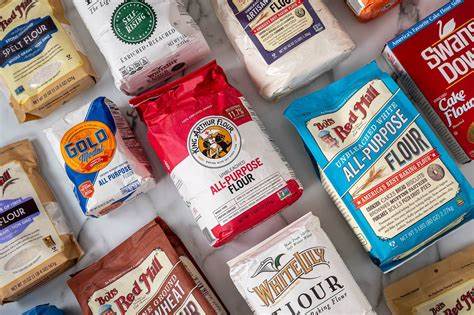
Here’s a visual guide to understanding different flour types and their protein percentages:

Flour Types & Their Protein Percentages
Different types of flour have varying protein levels, which directly affect their performance in baking:
🍰 Cake Flour (6-8%)
- Soft & Tender
- Ideal for light, airy cakes and delicate pastries.
🥐 Pastry Flour (8-9%)
- Delicate & Flaky
- Best for pie crusts, biscuits, and scones.
🍞 All-Purpose Flour (10-12%)
- Balanced for Most Baking
- Great for cookies, muffins, pancakes, and even some breads.
🥖 Bread Flour (12-14%)
- Strong & Elastic
- The go-to choice for yeasted breads and pizza dough.
🌾 Whole Wheat Flour (13-15%)
- Dense & Nutritious
- Absorbs more water, so hydration adjustments are necessary.
🥯 High-Gluten Flour (14-16%)
- Best for Bagels & Pizza
- Creates chewy, high-structure baked goods.

How to Determine the Protein Content in Flour
Want to calculate the exact protein percentage of any flour? It’s simple:
1️⃣ Find the grams of protein per serving (on the nutrition label).
2️⃣ Divide by the total grams per serving (usually 30g).
3️⃣ Multiply by 100 to get the percentage.
🔗 Check out our full guide on calculating protein content in flour here!
Quick Baking Tips for Flour Selection
✅ For softer bread, mix all-purpose and bread flour.
💦 Whole wheat absorbs more water—adjust hydration suitably.
🎂 Use cake flour for extra-light cakes and pastries.
📌 Save this guide for reference, and let us know in the comments—what’s your go-to flour for baking?
Keep Baking, Keep Learning! 🍞
Baking is all about experimenting, improving, and sharing knowledge. Whether you’re tackling a new sourdough recipe or perfecting your flour choice, we’ve got plenty of resources to help:
🔗 Looking for more baking guides? Check out our latest articles on Baking Great Bread at Home.
📖 Want to deepen your skills? Explore my books on Amazon.
💬 Have a question while baking? Use our Ask the Expert feature below to get instant answers!
