
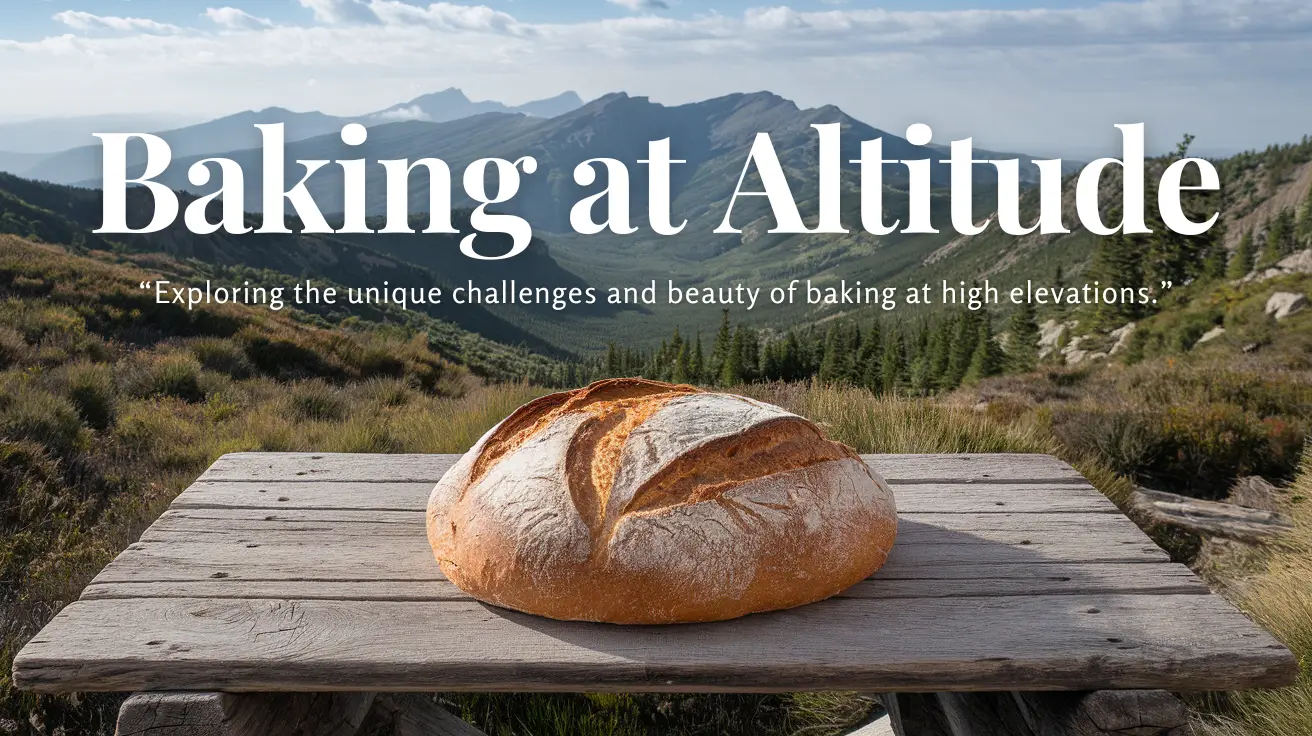
Ever wondered why your bread rises differently in the mountains than at the beach? Baking at different altitudes can change everything from dough texture to proofing time. Let’s break down what happens at different elevations, what to look for in your bread, and how to adjust your technique for perfect results every time.
🌄 What Happens to Bread Dough Above and Below 3,000 Feet
At about 3,000 feet and above, altitude can start to affect your bread-making process. Here’s what happens:
- Faster Rising: With lower air pressure, yeast ferments faster, making dough rise quicker and often leading to overproofing.
- Increased Evaporation: The drier air at higher altitudes makes moisture evaporate faster, sometimes resulting in a drier dough.
- Weaker Dough Structure: Dough tends to be softer and can struggle to hold its shape since gluten weakens faster.
On the other hand, at lower elevations (below 3,000 feet or at sea level), your bread generally rises more slowly, and the dough retains more moisture. This can mean better structure but longer waiting times for proper fermentation.

🔍 How to Determine Your Altitude
If you’re not sure what altitude you’re baking at, it’s simple to find out:
- Check Your Phone’s Maps App: Most smartphones have a built-in GPS that shows your current altitude. Open your Maps app, go to your location details, and look for your elevation.
- Use a Browser Search: Just type “current altitude” into your browser, and several sites will give you an answer based on your location.
- Google Your Location’s Elevation: You can also search for your city or town name followed by “elevation” to get a general idea.
Signs to Watch For in Your Bread at Higher Altitudes
- Overly Fast Rising: If your dough puffs up quickly and deflates, you’re likely dealing with overproofing.
- Dense or Dry Texture: Drier, compact bread can result from too little moisture or faster gluten weakening.
- Flat Loaves: If your bread isn’t holding shape, the dough may not be developing enough strength.

🌡️ How to Conquer High-Altitude Baking
- Adjust Yeast and Rise Times: Reduce your yeast a little or shorten the rise time to avoid overproofing.
- Reduce Water: Start with a bit less water—altitude can make dough feel wetter.
- Strengthen the Dough: Add extra folds or kneading to build gluten, which helps the dough hold shape.
- Cooler Rising Spot: Letting the dough rise in a cooler spot can slow down fermentation for better control.
For sea-level bakers, longer proofing times work in your favor for more flavor development, and higher hydration levels are easier to handle as moisture evaporates more slowly.
📝 Final Thoughts
Baking bread at different altitudes is all about knowing what to expect and making simple adjustments. Whether you’re baking at sea level or in the mountains, with a few tweaks, you’ll be on your way to consistently delicious results.
Ask the Expert: Real-Time Baking Help at Your Fingertips
Ever found yourself halfway through a recipe with a dough that’s too sticky, or a loaf that just won’t rise the way it should? If you’re like most of us, baking challenges tend to pop up at the least convenient times. That’s where our Ask the Expert feature comes in.
With Ask the Expert, you get real-time advice to solve those baking issues right when they happen. Whether you’re troubleshooting a sourdough starter that’s slow to rise or need guidance on adjusting recipes at high altitudes, this tool is here to help. Type in your question, and you’ll get tailored advice to keep your bread on track.
Don’t let baking roadblocks stand in the way of great results. Try “Ask the Expert” the next time you’re in a pinch and see how it can make all the difference.
