
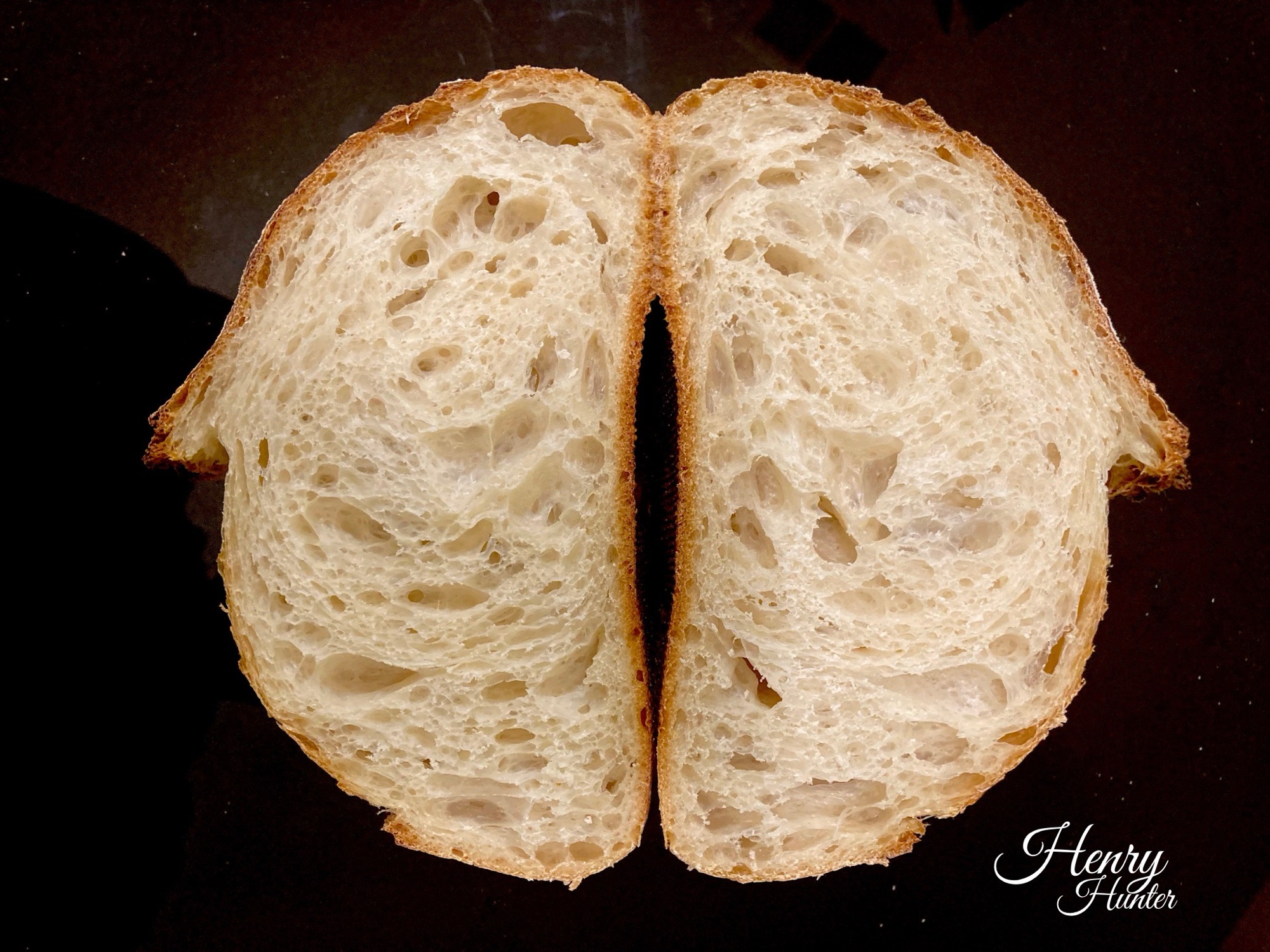
By: Henry Hunter
Henry’s Sourdough Bread-Making Process:
A Straightforward Guide
There’s an essential truth about sourdough bread-making: no single method reigns supreme. With as many approaches as there are bakers, the journey to creating the perfect loaf can seem daunting. The digital age tempts us to mix and match techniques from various sources – a YouTube video here, a Facebook post there, maybe even a snippet from grandma’s cherished recipe. While this might seem like a shortcut to becoming a more knowledgeable baker, it often leads to confusion and inconsistent results. My method, detailed below, is straightforward and tested. It’s designed to demystify the process, allowing you to bake great sourdough bread with confidence and clarity.
Sourdough bread-making is as varied as the bakers themselves, with countless methods available. My approach is designed for clarity and consistency, providing a solid foundation for your sourdough baking.
Fermentolyse (45 minutes to 3 hours):
Begin by combining water, and your sourdough starter mix until well combined, then add your flour. Mix until you have a shaggy mass. Cover and let rest for 45 minutes to an hour. This step, which I call fermentolyse, differs from the traditional autolyse by including the starter from the outset. It initiates hydration and early fermentation, setting the stage for robust flavor and gluten development. The duration varies based on kitchen temperature—longer in cooler environments to accommodate slower enzyme activity.
Incorporating Salt (10 to 15 minutes):
Post-fermentolyse, integrate sea salt into the dough. I opt for sea salt for its texture; feeling the crystals dissolve under my fingers during kneading signals the dough’s readiness for the next phase. Salt is added after initial hydration to avoid inhibiting enzymatic processes, ensuring full hydration and gluten formation. This step transitions the dough to a smooth, cohesive state.
Add the salt and dimple it in with damp fingers. Then fold the dough over onto itself and continue to dimple. Now it’s time for the intense mix. Using the *(rubaud method), mix until the salt is well incorporated, and the dough begins to show signs of becoming smooth. Approximately 10 to 15 minutes.
Folding Techniques (45 minutes between folds):
- Stretch and Folds: Employ this method for less hydrated doughs to enhance the gluten network.
- Coil Folds: Preferred for wetter doughs, this gentle technique helps preserve gas and structure without overly disturbing the dough.
- Performed three sets of folds 45 minutes apart. If you are in a warmer climate, you may want to go for 30 minutes between folds.
Rest and Pre-shape (30 minutes rest; 10 minutes bench rest):
Allow the dough to rest For 30 mins post-final fold to relax the gluten then, allow gravity to work, and let your dough fall onto a lightly floured surface for dividing if necessary, and preshaping. Pre-shape the dough by stretching and folding it gently. After pre-shaping, a brief rest on the counter, uncovered, facilitates final shaping by allowing the dough to slightly spread and relax.
Final Shape and Proof (6-8 hours in the fridge):
Shape the dough with intention, creating surface tension for a beautiful rise. The dough cold-proof or bulk ferment in the fridge, where slow fermentation enriches the flavor and bolster’s structure. This stage is crucial for developing complex sourdough characteristics.
Scoring and Baking Preparation (30 minutes in the freezer; bake at 475°F/234°C)
Tip: Before baking, freeze the dough briefly to firm it for precise scoring. Bake in a preheated Dutch oven to achieve a golden crust and perfect crumb. This method, starting with a cold dough and a hot oven, maximizes oven spring and enhances the bread’s aesthetic and texture.
Fermentolyse vs. Autolyse Explained:
In sourdough bread-making, understanding the subtle differences between fermentolyse and autolyse can significantly impact your final loaf. Although both processes involve hydrating the flour before the main kneading begins, there are key distinctions:
- Autolyse is the process of mixing flour and water and allowing it to rest before adding the starter and salt. This step aims to kickstart gluten development and enzymatic activity, making the dough easier to handle and enhancing its final structure and flavor. However, I prefer not to add salt during this stage because salt can inhibit enzyme activity, slowing down both hydration and fermentation initially.
- Fermentolyse, a term I use in my method, adds the sourdough starter along with flour and water from the beginning but delays the salt addition. This variation encourages early fermentation, contributing to the dough’s flavor and strength. Incorporating the starter early on leverages its natural enzymes alongside those present in the flour, creating a more complex flavor profile.
Incorporating Sea Salt:
I’ve found that adding sea salt after the initial rest period, rather than during the autolyse, has several benefits. Sea salt not only enhances flavor but also tightens the gluten network, providing structure to the dough. As I knead the dough and feel the salt crystals dissolve – a process that takes about 10 minutes – I know the gluten development is proceeding well. This tactile feedback is invaluable in assessing the dough’s readiness for the next steps.
Proofing Clarification:
For proofing, I exclusively use a refrigerator method, totaling 6-8 hours. This slow fermentation is beneficial for flavor development and dough structure. I skip countertop proofing because the consistent, cooler environment of the fridge offers better control, especially in varying climates. This approach ensures the dough is sufficiently fermented and ready for baking.
Scoring and Preparing for Baking:
Before scoring, I place the dough in the freezer for about 30 minutes. This isn’t to freeze it solid but to firm it up, making intricate scoring easier. The dough won’t come to room temperature by the time it’s baked; rather, the brief freezer stint and subsequent scoring provide a perfect temperature gradient that contributes to the oven spring and the bread’s aesthetic appeal.
Final Thoughts:
Embracing these techniques – fermentolyse for flavor and gluten development, sea salt incorporation for structure and taste, precise proofing for consistency, and careful temperature management for scoring – will elevate your sourdough baking. Remember, it’s the attention to these details that transforms good bread into great bread. My Foolproof Sourdough Loaf: https://bit.ly/3FNuq3j
Sourdough baking is an art that marries patience with precision. This guide is crafted to demystify the process, making sourdough bread-making accessible and enjoyable. Remember, consistency in your approach transforms good bread into exceptional loaves. Happy baking!

