
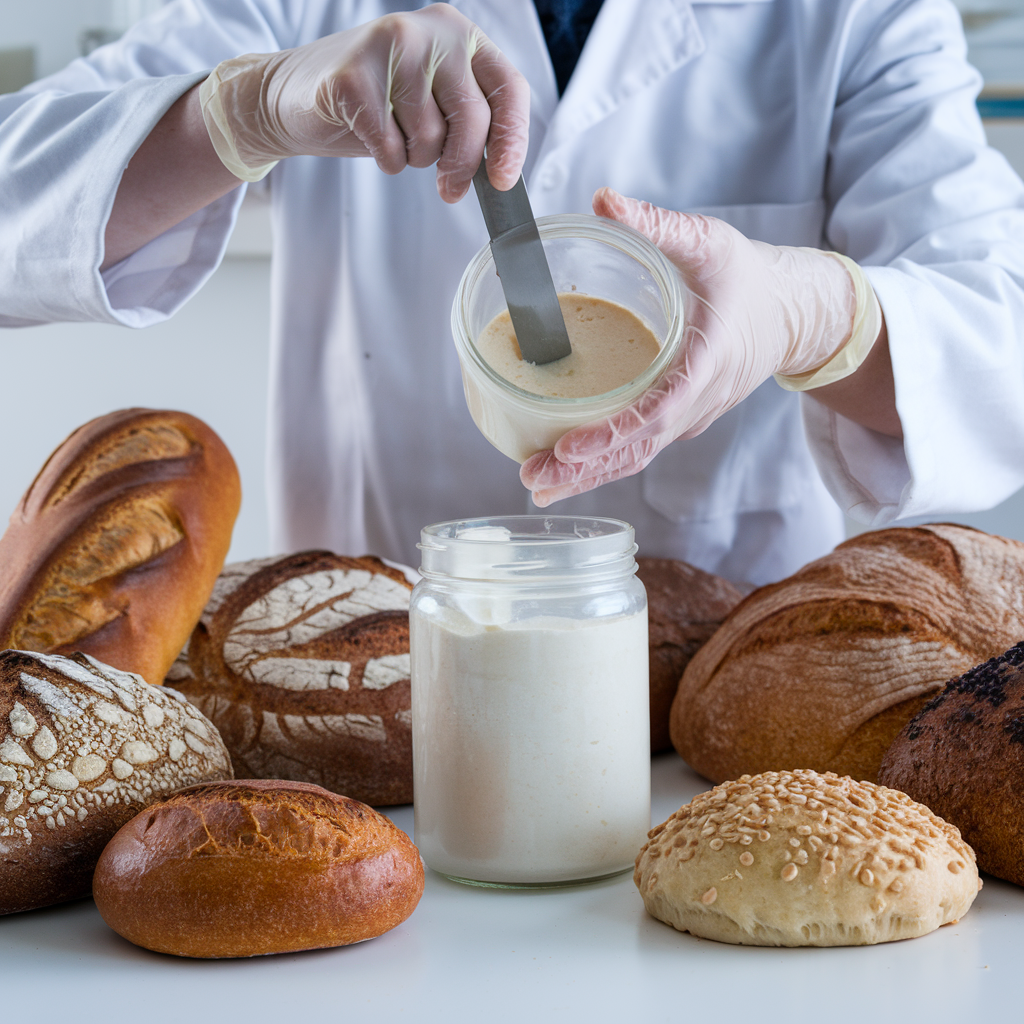

Unraveling the Mysteries of Sourdough Starter Active Feeding
By: Henry Hunter
Advanced bakers know that the secret to perfect sourdough lies not just in its ingredients, but in the intricate dance of microorganisms during the feeding process. This post dives deep into the science of what happens when you mix water into your sourdough starter before adding flour, and why this method is pivotal for the advanced baker.
The Active Feeding Process: Water First, Flour Second
When feeding your sourdough starter after the discard, mixing water in first before the flour is a strategic decision. This method is more than just a routine; it’s a scientific approach to optimizing the starter’s microbial activity.

Stimulating Microbial Activity with Water
Introducing water to the starter first plays a crucial role in awakening and distributing the yeast and bacteria. This mixing action ensures that these microorganisms are evenly dispersed throughout the mixture. But the science goes deeper – the addition of water first introduces oxygen, which is critical for the yeast’s metabolic processes.
Oxygen: The Catalyst for Yeast Growth
In the presence of oxygen, yeast cells shift their focus from fermentation to growth and multiplication. This oxygen-rich environment, created by the initial mixing with water, encourages a more robust yeast population. This is crucial because a healthy and diverse yeast population is key to a strong, active starter.

Flour: Providing Food and Consistency
Once water has kickstarted the microbial activity, adding flour provides the necessary food and environment for fermentation. Flour not only feeds the yeast and bacteria but also helps maintain the acidity and consistency of the starter, ensuring a balanced and healthy ecosystem for fermentation to occur.
Conclusion: The Art and Precision of Sourdough Feeding
Understanding the science behind each step of the sourdough feeding process elevates your baking artistry. As an advanced baker, appreciating these subtleties allows you to cultivate a starter with optimal yeast activity and fermentation potential – the cornerstone of exceptional sourdough bread.
A Fall Slowdown for Vitale
The leaves outside my kitchen window have turned the most delightful shades of red and gold. Fall is here, and with it comes a change in the air, both outside and inside my jar.
During the summer, Henry would feed me, and I would spring to life within hours, bubbling with joy and vigor. But now, as the days grow shorter and the air turns crisp, I’ve noticed a certain sluggishness in my movements.
It seems that even I, Vitale, Henry’s sourdough starter, am not immune to the rhythm of the seasons. Just like the leaves falling from the trees, my metabolism has slowed down. Henry still tends to me, lovingly measuring out the flour and water, but it takes me longer to respond. It’s as if I need a bit more time to wake up from my summer slumber.
But you know what? He doesn’t mind it one bit. Fall has its own kind of magic. It’s a time for cozy blankets and warm mugs of tea, and I think my slower pace fits right in. Besides, this change allows me to develop deeper, richer flavors, just like the earthy scent of fallen leaves underfoot.
I may not be as quick to rise as I was in the summer, but I’m still here, brewing and bubbling, getting ready for our next baking adventure. Henry and I may need a little more patience, but that’s alright because great things often take time. So, as the seasons change, so do I, and that’s something to celebrate.
Here’s to fall, to change, and to the delicious breads we’ll create together as the days grow shorter and the nights a little colder.
~Vitale

Advertisement:
The first-of-its-kind Sourdough Home allows you to maintain your sourdough starter on your schedule with degree-by-degree control over the temperature.
Find a setting that generates a feeding schedule to work with your schedule. No matter your need, you’ll have a starter that’s ready when you are.
